
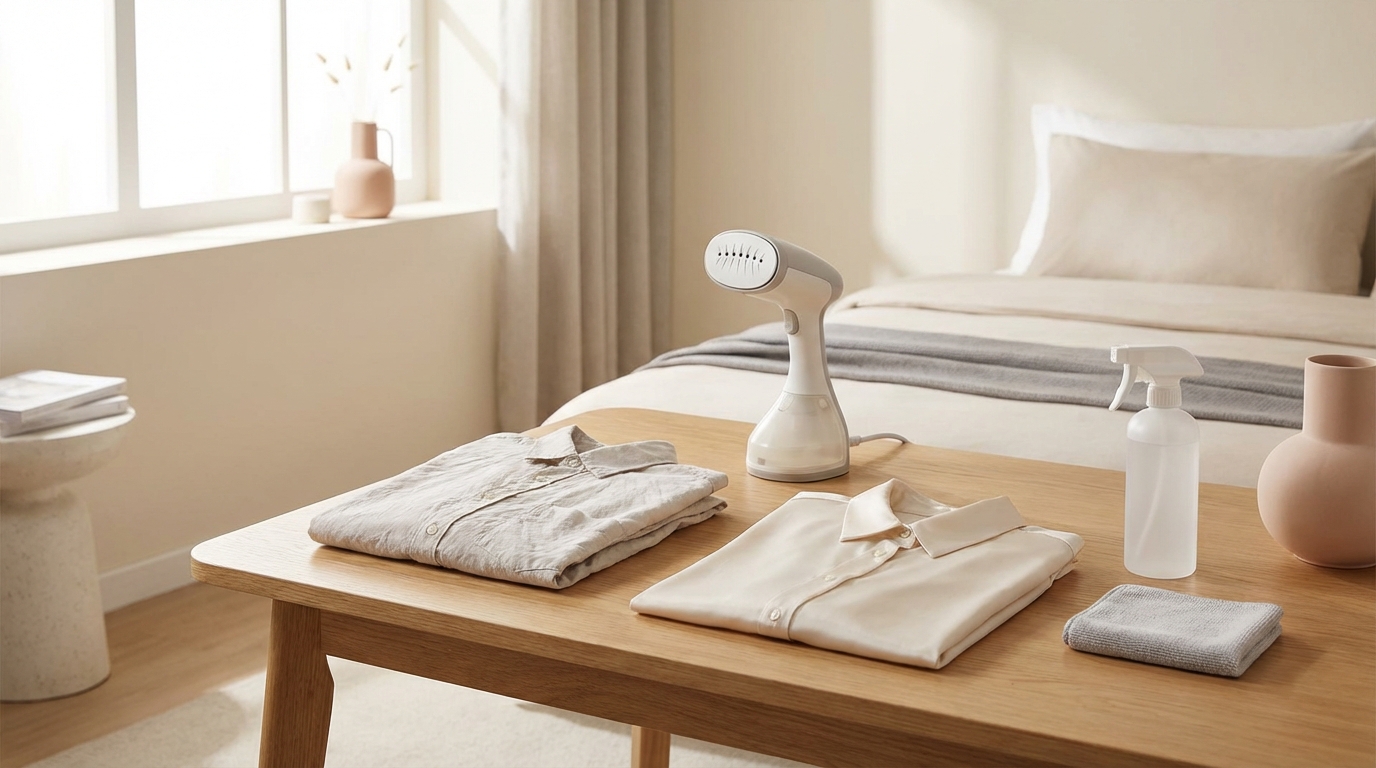
You’re standing in front of your closet, already running five minutes late, and your favorite blouse looks like it spent the night crumpled at the bottom of a gym bag. Pulling out the iron means dragging out the board, waiting for it to heat, and carefully maneuvering around buttons. For moments like these, a budget garment steamer can be a genuine lifesaver. The good news? You don’t need to spend a fortune to get one that actually works.
In this guide, you’ll learn what separates a decent budget steamer from one that’ll frustrate you within a week, which type suits your lifestyle, and how to pick the right option without overspending. Whether you’re refreshing work clothes, de-wrinkling curtains, or prepping outfits for travel, there’s a solid choice out there that won’t drain your wallet.
Quick Verdict: Best Budget Garment Steamers by Need
- Best for daily quick touch-ups: A compact handheld steamer with fast heat-up (under 30 seconds) and a medium-sized water tank.
- Best for heavier fabrics and larger loads: A standing steamer with a larger water reservoir and higher steam output.
- Best for travel: A lightweight, portable handheld model that fits easily in luggage.
- Best for small spaces: A slim handheld unit that stores in a drawer or closet door pocket.
What to Look for in a Budget Garment Steamer
Not all steamers are created equal, and when you’re shopping under the $50 mark, knowing what actually matters helps you avoid buyer’s remorse. Here are the key features worth paying attention to.
Steam Output
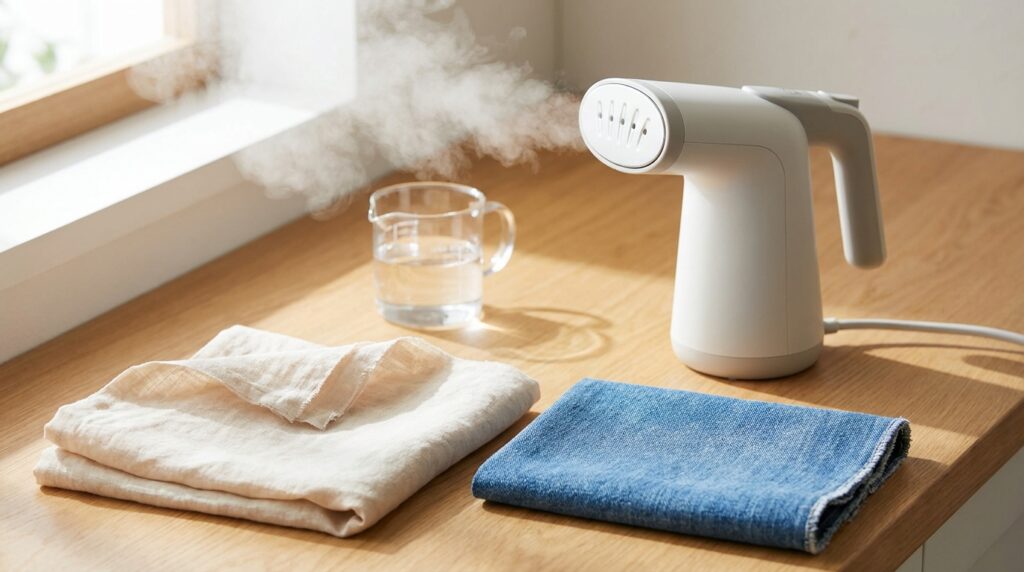
Steam output is measured in grams per minute (g/min). For light fabrics like polyester blends and thin cotton, around 20 g/min works fine. If you’re tackling thicker materials like linen, denim, or wool blends, look for something closer to 30–40 g/min. Budget models typically fall in the 20–35 g/min range, which handles most everyday clothing without issue.
Water Tank Capacity
A common frustration with cheaper steamers is constantly refilling the tank. Handheld models usually hold between 100–250 ml, giving you roughly 10–15 minutes of continuous steam. If you’re steaming multiple items at once, a larger tank (or a standing model with a reservoir of 1.5 liters or more) saves time and annoyance.
Heat-Up Time
When you’re in a rush, waiting three minutes for steam feels like an eternity. Many budget handhelds now heat up in 15–30 seconds, which is genuinely impressive for the price. Standing steamers take a bit longer, usually 45 seconds to a couple of minutes, but deliver more consistent steam once they’re going.
Cord Length and Portability
Short cords are a sneaky problem. If you’re steaming clothes on a hanger or working near an outlet-challenged corner of your room, a cord under five feet becomes a hassle. Look for at least six feet of cord, or consider a model with a swivel base if you’re going the standing route.
Handheld vs. Standing Steamers: Which Makes Sense?
This is where most people get stuck, so let’s break it down simply.
Option: Handheld Steamer
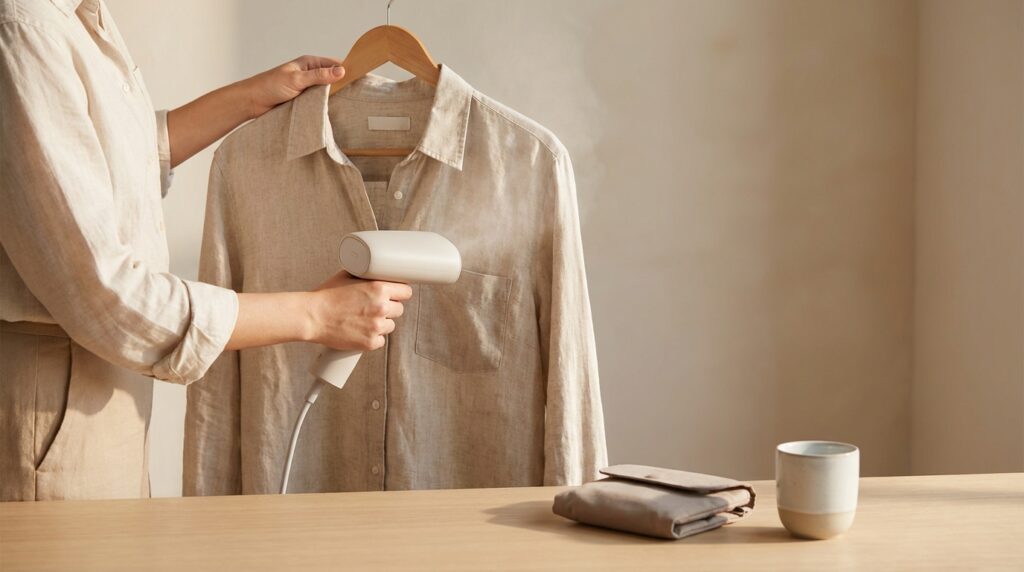
Handheld steamers are compact, lightweight, and perfect for quick fixes. They’re the go-to choice if you’re steaming one or two items at a time, traveling frequently, or living in a smaller space where storage matters.
- Pros: Affordable (many solid options under $30), heats up fast, easy to store, travel-friendly.
- Cons: Smaller water tank means more refills, can tire your arm during longer sessions, may struggle with very thick fabrics.
Option: Standing Steamer
Standing steamers come with a base, a pole, and a hanger attachment. They’re better suited for steaming multiple garments in one go or handling heavier fabrics like curtains and upholstery.
- Pros: Larger water tank (less refilling), hands-free hanger setup, stronger steam output on most models.
- Cons: Takes up more space, less portable, slightly higher price point even at budget level.
If you’re steaming a shirt before work a few times a week, a handheld is probably all you need. If you’re refreshing an entire week’s worth of outfits on Sunday evening or regularly steaming bedding and drapes, a standing model earns its floor space.
Common Mistakes When Buying a Budget Steamer
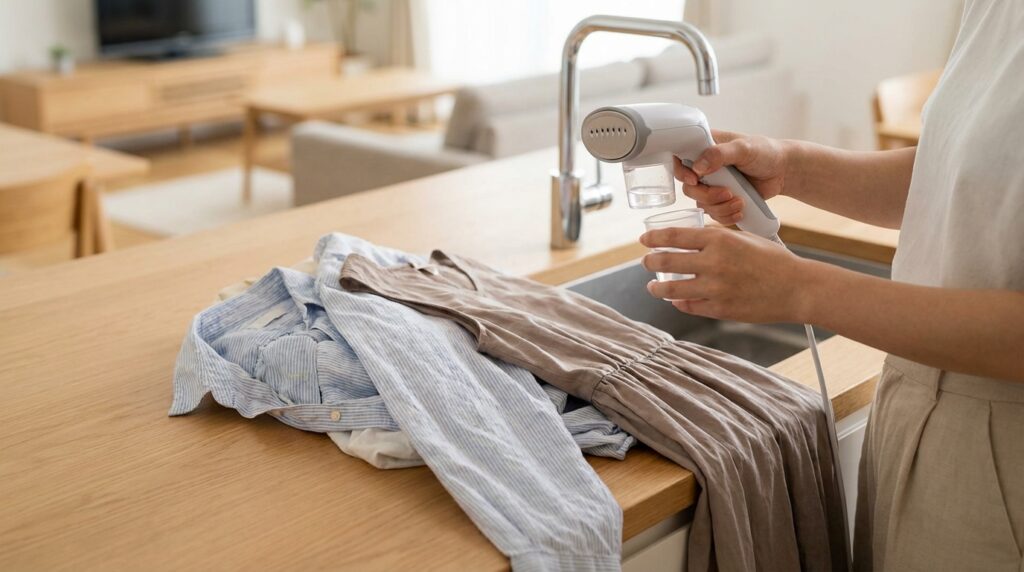
A few pitfalls trip people up repeatedly. Avoiding these saves you from returning a steamer (or letting it collect dust in a closet).
- Ignoring water tank size: That ultra-compact model looks cute until you’re refilling it three times to finish one dress.
- Expecting iron-level crispness: Steamers relax wrinkles; they don’t create sharp creases. If you need knife-edge pleats on dress pants, you still need an iron.
- Skipping the heat-up spec: A steamer that takes two minutes to heat defeats the purpose of “quick” wrinkle fixes.
- Forgetting about dripping: Cheaper models sometimes spit water if overfilled or held at the wrong angle. User reviews often mention this, so it’s worth checking before buying.
- Not checking the cord length: Measure the distance from your nearest outlet to where you’ll actually steam. A four-foot cord with no extension in sight is a recipe for frustration.
Who This Is For (and Who It’s Not)
Budget garment steamers work beautifully for a specific set of needs. Here’s a quick reality check.
A budget steamer is great if you:
- Want to quickly de-wrinkle clothes without setting up an ironing board.
- Travel often and need something lightweight for hotel room touch-ups.
- Mostly wear casual or business-casual fabrics (cotton blends, polyester, rayon, light linen).
- Live in a small apartment and can’t spare room for a full ironing setup.
- Hate ironing and just want “good enough” results fast.
A budget steamer might not be ideal if you:
- Regularly need crisp, pressed creases on formal trousers or dress shirts.
- Work with very heavy fabrics like thick wool coats or structured blazers daily.
- Steam large quantities of items frequently (a mid-range or professional model may be worth the investment).
If you’re somewhere in between, starting with a budget handheld is a low-risk way to see if steaming fits your routine. You can always upgrade later if you find yourself reaching for it constantly.
Tips for Getting the Most Out of Your Steamer
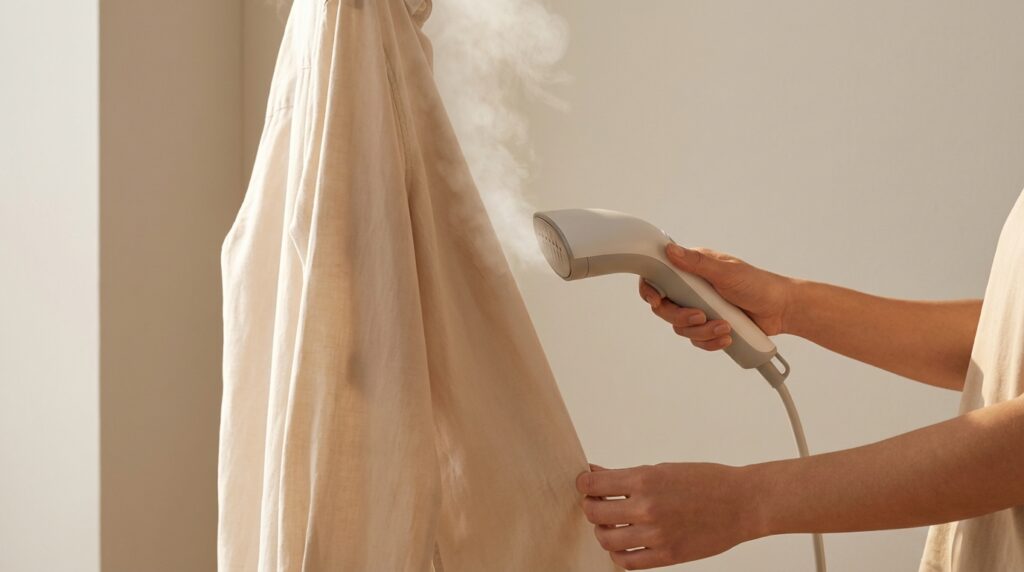
Even a budget steamer performs better with a few simple habits.
Use distilled water. Tap water contains minerals that build up inside the steamer over time, clogging the nozzle and reducing steam output. Distilled water costs a couple of dollars per gallon and extends your steamer’s life significantly.
Steam vertically when possible. Hanging the garment and steaming downward lets gravity help smooth the fabric. Steaming flat on a bed works in a pinch, but vertical is more effective.
Pull the fabric taut. Gently tugging the bottom hem while steaming helps wrinkles release faster. Don’t yank hard enough to stretch the fabric—just enough tension to keep it smooth.
Empty the tank after each use. Leaving water sitting inside encourages mineral buildup and, in some cases, mildew. A quick empty-and-dry routine takes ten seconds and prevents problems down the road.
Start with the inside of delicate fabrics. If you’re nervous about a silk blouse or a piece with embellishments, steam from the inside first. This reduces the risk of water spots or heat damage on the visible side.
Frequently Asked Questions
Can a garment steamer replace an iron completely?
For most casual and business-casual wardrobes, yes. Steamers handle everyday wrinkles quickly and gently. However, if you need sharp creases—think crisp dress shirt collars or pleated trousers—an iron still does that job better. Many people keep both and reach for the steamer 90% of the time.
Is it safe to use a steamer on all fabrics?
Most fabrics tolerate steam well, including cotton, linen, polyester, wool, and silk. Use caution with suede, waxed jackets, or anything with plastic embellishments that could warp. When in doubt, test on an inconspicuous area first or check the garment’s care label.
Why does my steamer spit water instead of steam?
This usually happens when the water tank is overfilled, the steamer hasn’t fully heated, or you’re holding it at too sharp an angle. Let it heat completely before use, fill only to the max line, and keep the steamer relatively upright while operating.
How long do budget steamers typically last?
With proper care—using distilled water, emptying the tank, and storing it dry—a budget steamer can last two to four years of regular use. Skipping maintenance shortens that lifespan considerably.
Summary and Next Step
A budget garment steamer is one of those small purchases that can genuinely simplify your morning routine. Focus on finding a model with a reasonable water tank size, fast heat-up time, and enough steam output for the fabrics you wear most. Handheld models suit quick daily touch-ups and travel, while standing steamers make sense if you’re tackling larger loads or heavier materials.
If you’re unsure where to start, pick up an affordable handheld in the $25–$45 range and give it a few weeks. You’ll quickly discover whether steaming fits your routine—and chances are, you’ll wonder why you waited so long to ditch the ironing board for everyday wrinkles.