
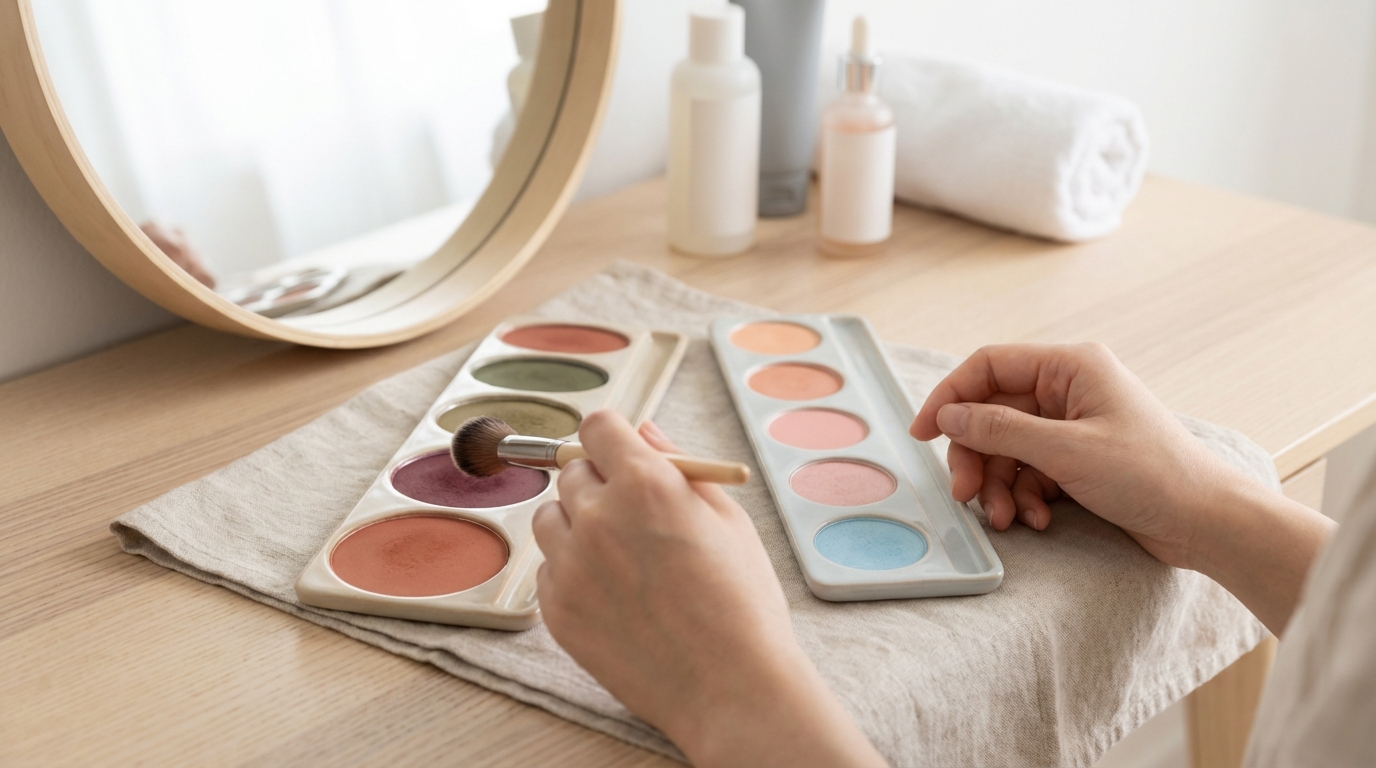
You finally find a foundation that looks perfect in January, and then summer rolls around and suddenly you look like you’re wearing a mask. Or maybe you’ve noticed that the lipstick shade you loved in autumn feels completely off once spring arrives. Figuring out how to choose makeup shades for different seasons can feel like solving a puzzle that keeps changing—but it doesn’t have to be complicated.
This guide will help you understand why your makeup needs shift throughout the year, how to identify which shades work best for each season, and how to build a flexible routine without buying an entirely new collection every few months. The goal is simple: look like yourself, just with makeup that actually matches.
Quick Guide to Seasonal Shade Selection
- Know your undertone first — it stays constant even when your skin tone shifts.
- Spring: Soft, warm shades like peach, coral, and light bronze.
- Summer: Adjust foundation 1-2 shades darker; embrace bronzers and warm lip colors.
- Autumn: Transition to deeper, earthy tones like terracotta, berry, and warm browns.
- Winter: Go lighter on base makeup; cooler pinks, plums, and classic reds work well.
- Blend, don’t replace — mixing shades you already own saves money and creates custom matches.
What You’ll Need
- A mirror with good natural lighting (window light is ideal)
- Your current foundation or concealer shades
- A white piece of paper or fabric (for undertone testing)
- A few lip and cheek products in different color families
- Optional: a foundation mixing medium or lighter/darker foundation for blending
Understanding Your Undertone First

Before you start swapping shades with the seasons, you need to know your undertone. This is the color beneath the surface of your skin, and unlike your surface tone, it doesn’t change much throughout the year. People generally fall into three categories: warm, cool, or neutral.
Step 1: Look at the veins on the inside of your wrist in natural light. If they appear more green, you likely have warm undertones. If they look blue or purple, you’re probably cool-toned. A mix of both suggests neutral undertones.
Step 2: Hold a white piece of paper next to your face. Does your skin look more yellow or golden against it? That’s warm. Does it look pink or rosy? That’s cool. If you can’t tell, you’re likely neutral.
Why does this matter? Because your undertone determines which shade families will flatter you year-round. A warm-toned person will still look best in warm-leaning shades even in winter—they’ll just need a lighter version of those warm tones.
Choosing Makeup Shades for Each Season
Spring Shades
Spring is when most people start to get a bit of color back after winter, but the shift is subtle. This isn’t the time for dramatic bronzer—it’s about fresh, soft warmth. Think peach blush instead of deep rose, coral lipstick instead of berry, and a foundation that might be just half a shade warmer than your winter one.
A common mistake here is jumping straight into summer shades too early. If you’re still pale in March but wearing a tan-level foundation, the mismatch shows up immediately around your jawline and neck. Ease into it.
Summer Shades
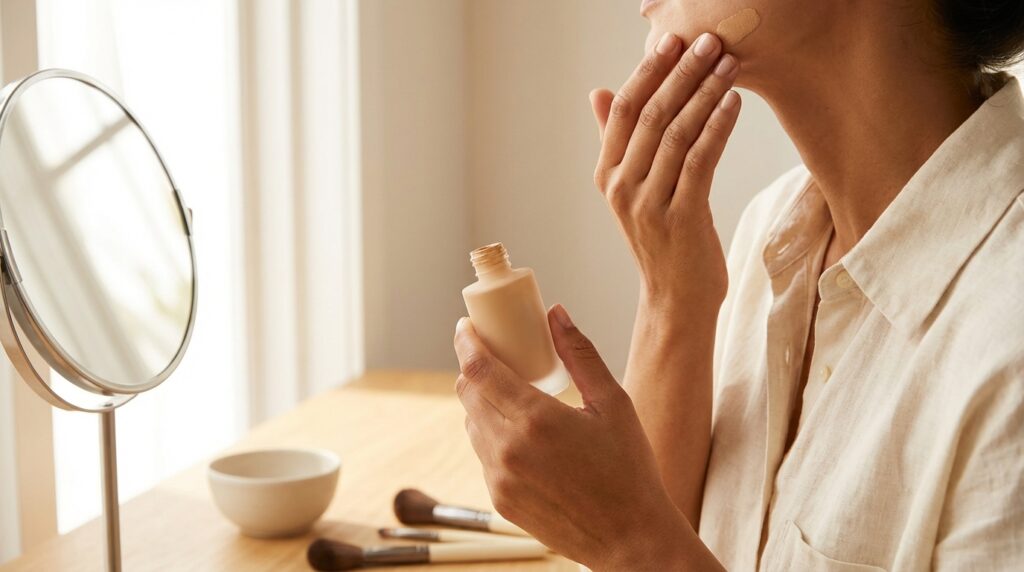
Summer is when your skin tone shifts the most, especially if you spend any time outdoors. Even with sunscreen (which you should absolutely be wearing), most people get at least slightly darker or more golden.
Step 3: Test your foundation on your jawline in natural light. If it looks ashy or too light, it’s time to go up a shade. Many people need to adjust by one to two shades during peak summer months.
This is also the season to embrace bronzer and warmer lip colors. If you’re running late and want a quick, put-together look, a sweep of bronzer on the cheekbones and a tinted lip balm in a warm nude can do most of the work.
One practical tip: instead of buying a completely new foundation, try mixing your winter shade with a darker one. A little goes a long way, and you’ll get a custom match without extra spending.
Autumn Shades
As summer fades, so does your tan—but not all at once. Autumn is a transitional season, and your makeup should reflect that. This is the time for richer, earthier tones: terracotta blush, warm brown eyeshadows, berry or brick-toned lips.
Step 4: Gradually blend your summer foundation with your lighter shade as your tan fades. Check your match every few weeks, because the shift can be faster than you expect.
If you live somewhere with dramatic seasonal changes, autumn is also when your skin might start to feel drier. Cream-based products tend to look more natural on drier skin than powders, so consider swapping your powder blush for a cream formula.
Winter Shades
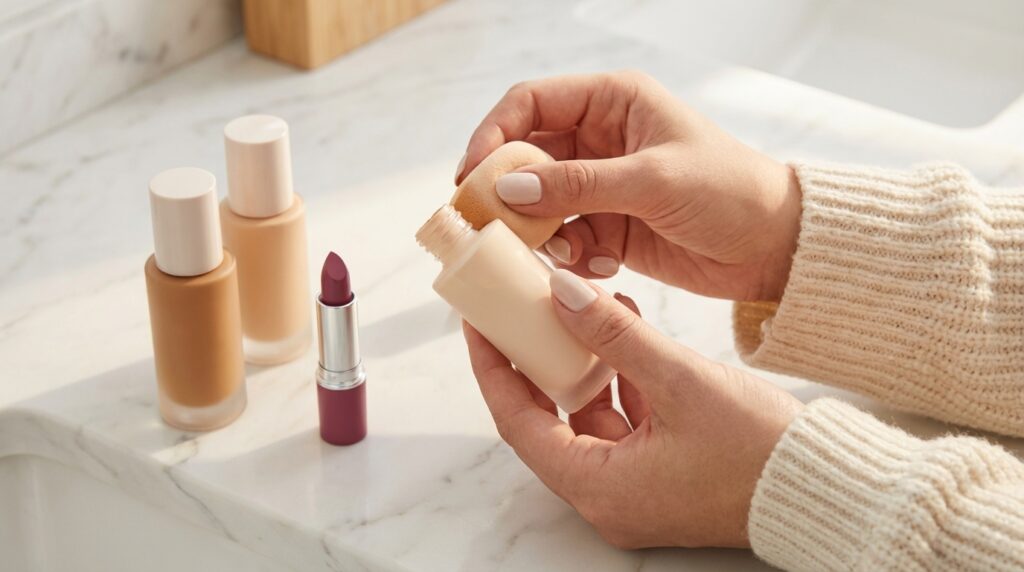
Winter is when most people are at their palest, and the lighting tends to be harsher indoors. This is the season to go lighter on your base and embrace cooler or more classic shades—think cool pinks, plums, and true reds for lips.
Step 5: If your summer foundation looks obviously orange or dark now, it’s time to switch back to your lighter shade. Don’t try to hold onto summer color with the wrong foundation—it never looks natural.
A mini scenario: if you’re heading to a holiday event and want to look polished without a full face, focus on a well-matched base, a bit of blush in a cool rose tone, and a classic red or berry lip. Simple, but it works.
Common Mistakes When Switching Seasonal Shades
- Ignoring the neck test: Always check your foundation against your neck and chest, not just your face. Your face can be a different shade than the rest of you, especially in summer.
- Buying too many shades: You don’t need four different foundations. Two shades (one lighter, one darker) that you can mix will cover most of the year.
- Forgetting about brows: If your hair lightens in summer or you go darker in winter, your brow product might need a slight adjustment too.
- Matching to your tan, not your undertone: A tan changes your surface color, but your undertone stays the same. A warm-toned person with a summer tan still needs warm-leaning shades, just deeper ones.
- Skipping the blend: Harsh lines between your face and neck are the biggest giveaway of a mismatched foundation. Blend down onto your neck, especially along the jawline.
Shortcut if You’re Short on Time
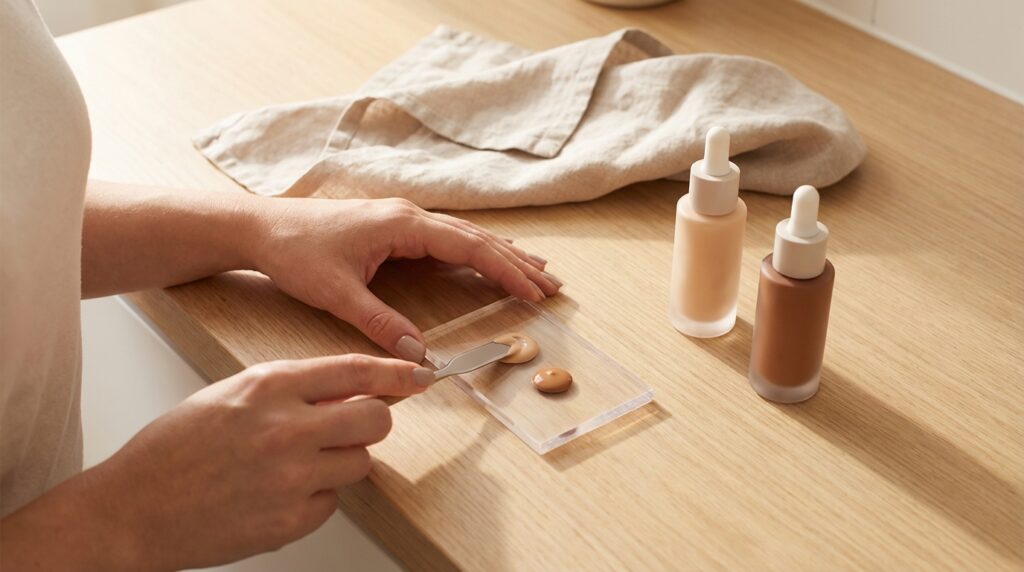
- Keep just two foundation shades and mix as needed—this covers 90% of seasonal shifts.
- Use a tinted moisturizer or skin tint in summer; they’re more forgiving than full-coverage foundation.
- Stick to one “neutral” blush and one “warm” blush—swap between them seasonally.
- A sheer lip color or tinted balm works year-round and requires less precise matching.
- When in doubt, test new shades in natural daylight before committing.
Frequently Asked Questions
Do I really need different makeup for each season?
Not entirely different, no. Most people only need to adjust their base makeup (foundation, concealer) and maybe one or two accent products like blush or lipstick. The key is flexibility, not a complete overhaul.
What if my skin tone doesn’t change much throughout the year?
Some people have very stable skin tones regardless of season. If that’s you, focus on shifting your color palette (lips, cheeks, eyes) to match seasonal vibes rather than adjusting your base.
How do I know if a shade is wrong for me?
The most obvious signs: your foundation looks gray, orange, or like a mask against your neck. For lip and cheek colors, if a shade makes you look washed out or sallow, it’s probably the wrong undertone for you.
Can I wear warm shades if I have cool undertones?
Yes, but choose carefully. Cool-toned people can wear warm shades that lean slightly neutral. The trick is avoiding anything too yellow or orange, which can clash with pink undertones.
Summary and Next Step
Choosing makeup shades for different seasons comes down to a few basics: know your undertone, adjust your base as your skin shifts, and don’t overthink the rest. You don’t need a new collection every few months—just a couple of versatile shades and the willingness to blend.
Your next step? Check your current foundation in natural light and see how it matches your neck right now. If it’s off, you know where to start. Small adjustments make a bigger difference than a complete makeup overhaul, and your wallet will thank you.