
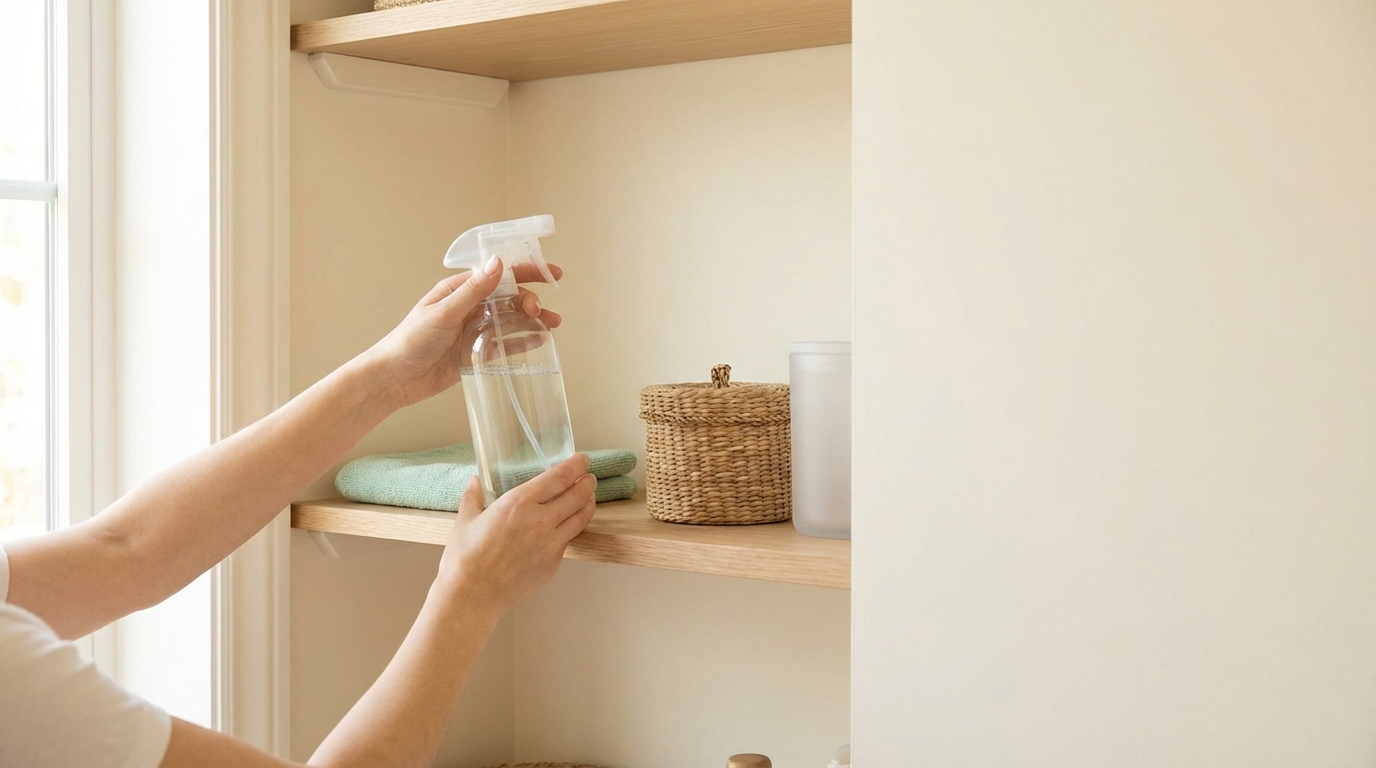
Picture this: you open the cabinet under the kitchen sink, and three bottles tumble out. One’s leaking. Another has a faded label you can’t read anymore. And somewhere in the back, there’s a spray bottle your toddler could absolutely reach if they tried hard enough. Sound familiar?
Learning how to safely store cleaning products in a small home isn’t just about tidiness—it’s about preventing accidental poisonings, chemical reactions, and that lingering anxiety every time a curious kid or pet wanders too close. The good news? You don’t need a dedicated utility room or expensive organizers. A few smart adjustments can make even a 500-square-foot apartment surprisingly safe.
Why Safe Storage Matters More in Compact Spaces
In larger homes, cleaning supplies often live in a basement, garage, or laundry room—spaces naturally separated from daily living areas. Small homes don’t have that luxury. Your all-purpose cleaner might sit three feet from your cooking oils. The bleach shares a shelf with the vinegar (a combination that creates toxic chlorine gas, by the way).
The risks multiply when space shrinks:
- Products are more likely to be stored at child or pet height
- Incompatible chemicals end up side by side
- Poor ventilation concentrates fumes in tight areas
- Cluttered cabinets lead to spills and forgotten expiration dates
According to poison control data, household cleaning substances remain one of the top five causes of accidental poisoning in children under six. Most incidents happen at home, in spaces families assume are “safe enough.”
What You Need for Organizing Cleaning Supplies Safely
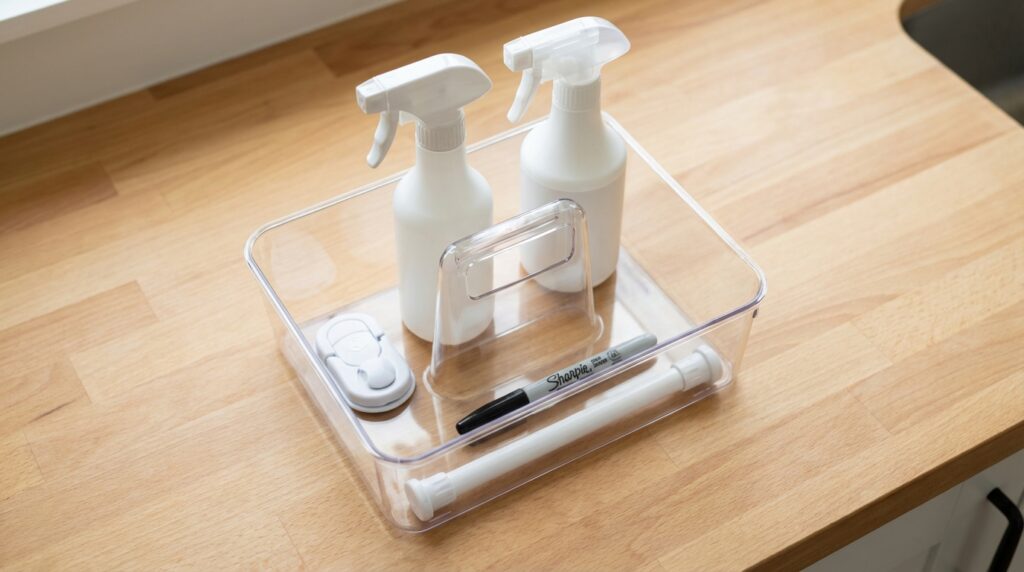
Before rearranging anything, gather these items. Total cost: roughly $15–$40 depending on what you already own.
- Plastic bins or caddies with handles – Contain leaks and make products portable
- Child-safety cabinet locks – Magnetic or adhesive versions work on most cabinet types
- A permanent marker – For labeling homemade solutions or faded bottles
- Small tension rod – Creates a second “shelf” inside cabinet doors for spray bottles
- Over-the-door organizer or wall-mounted rack – Moves products up and out of reach
- Leak-proof tray or boot tray – Catches drips before they damage cabinet floors
Smart Tip: Skip the decorative open shelving for cleaning products. It looks great on Pinterest, but exposed chemicals collect dust, degrade faster in sunlight, and stay within easy reach of little hands. Closed storage is always safer.
Step-by-Step: Setting Up Safe Cleaning Product Storage
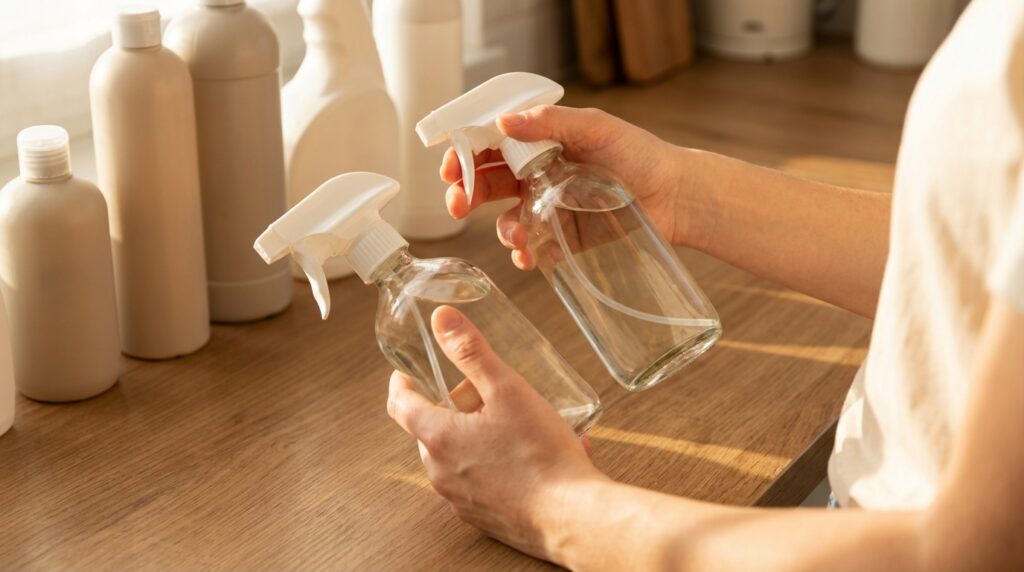
- Empty everything out. Yes, all of it. You’ll likely find duplicates, expired products, and mystery bottles. Toss anything without a readable label or past its prime (most cleaners last 1–2 years once opened).
- Sort by chemical type. Group products into categories: acids (vinegar-based, toilet bowl cleaners), bases (bleach, ammonia-based cleaners), and neutral/mild (dish soap, eco-friendly sprays). These groups should never share the same bin.
- Check for incompatible neighbors. Bleach and ammonia? Dangerous. Bleach and vinegar? Toxic gas. Hydrogen peroxide and vinegar? Creates peracetic acid. Keep these in separate containers, ideally in different cabinets if possible.
- Install child-safety locks. Even if you don’t have kids, visiting nieces, nephews, or grandchildren can find trouble fast. Magnetic locks are invisible from outside and take about 10 minutes to install.
- Use vertical space. Mount a tension rod inside a cabinet door to hang spray bottles by their triggers. This frees up shelf space and keeps bottles upright (reducing leaks).
- Elevate what you can. In small homes, the highest shelf is your friend. Store concentrated or hazardous products up high, everyday items at mid-level, and nothing toxic below knee height.
- Add a leak-catching tray. Place a plastic boot tray or shallow bin under grouped products. If something spills, it stays contained instead of seeping into cabinet wood or flooring.
- Label everything. Homemade cleaners especially. Include the ingredients and date made. “Green spray” means nothing six months later when you’ve forgotten the recipe.
Creating Smart Zones for Different Product Types
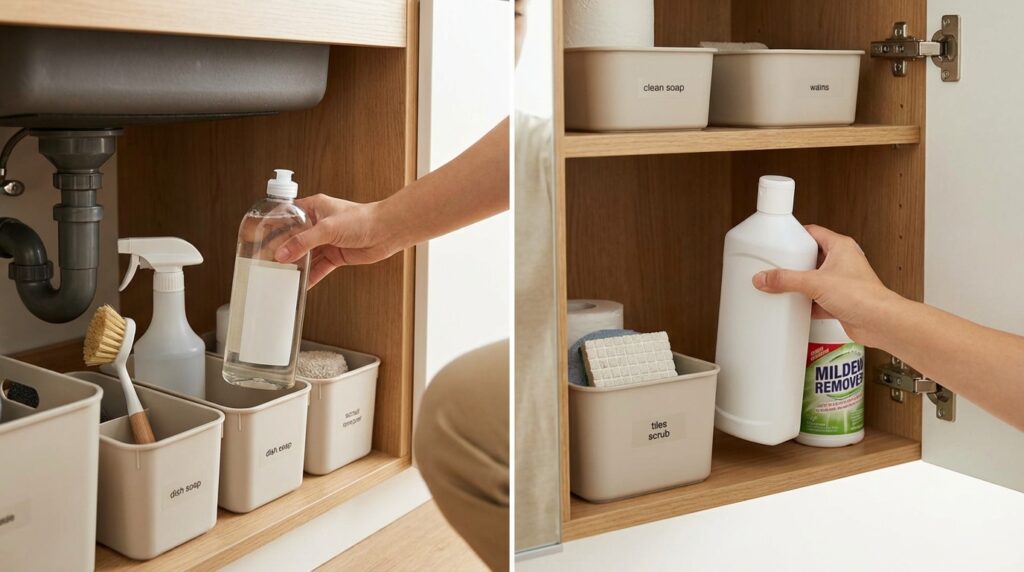
Not all cleaning products belong together, even when space is tight. Here’s a practical zoning system that works in apartments, tiny houses, and small condos:
Zone 1: Kitchen Cabinet (Under Sink or Adjacent)
- Dish soap, surface sprays, and food-safe cleaners only
- Avoid storing anything with bleach or harsh chemicals near food prep areas
- Keep this zone locked if children are present
Zone 2: Bathroom Cabinet or Closet
- Toilet bowl cleaner, tile scrub, mildew removers
- These are often more acidic or caustic—store on a tray to catch drips
- Ensure ventilation; bathrooms trap fumes
Zone 3: High Shelf or Locked Closet
- Concentrated products, drain openers, oven cleaners
- Anything with strong warnings on the label lives here
- This is your “out of sight, out of reach” zone
Zone 4: Portable Caddy
- Daily-use items you carry room to room
- Microfiber cloths, glass cleaner, all-purpose spray
- Store the caddy in Zone 1 or 2 when not in use
Common Mistakes That Create Hidden Hazards
Even well-intentioned storage setups can go wrong. Watch for these:
Transferring products to unlabeled containers. That pretty glass bottle looks nicer than the original plastic, but without a label, someone might mistake cleaner for cooking oil—or worse, a drink. Always keep products in original containers or label clearly.
Storing near heat sources. The cabinet above the stove seems convenient, but heat degrades chemicals and can cause pressure buildup in spray bottles. Keep cleaning products in cool, dry spots.
Ignoring expiration dates. Old bleach loses effectiveness. Expired hydrogen peroxide becomes plain water. Degraded products can also become unstable. Check dates annually and replace as needed.
Assuming “natural” means “safe to mix.” Eco-friendly cleaners still contain active ingredients. Castile soap and vinegar, for example, cancel each other out and leave a filmy residue. Natural doesn’t mean consequence-free.
Overcrowding cabinets. When products are jammed together, you can’t see what you have, bottles get knocked over, and spills go unnoticed. If it doesn’t fit comfortably, it’s time to declutter or add another storage zone.
Frequently Asked Questions
Can I store cleaning products in the garage or on a balcony?
Temperature extremes can degrade products or cause containers to crack. If your garage stays between 50–80°F (10–27°C), it’s usually fine. Avoid direct sunlight and freezing conditions.
How do I dispose of old cleaning products safely?
Check your local waste management guidelines. Many areas have hazardous waste drop-off days. Never pour concentrated chemicals down the drain or into the trash without checking first.
Are eco-friendly cleaners safer to store together?
Generally yes, but still avoid mixing acids (citric acid, vinegar) with bases (baking soda, castile soap) in the same bin. Leaks happen, and even mild reactions create mess.
What’s the best lock for renters who can’t drill?
Adhesive magnetic locks work well and remove cleanly. Alternatively, a portable lockbox stored inside a cabinet keeps the most hazardous items secure without any installation.
Wrapping Up
Safe cleaning product storage in a small home comes down to three principles: separate incompatible chemicals, elevate hazardous items, and contain potential leaks. You don’t need a renovation—just a weekend afternoon, a few inexpensive organizers, and a willingness to toss what’s expired or unidentifiable.
Start with the cabinet that worries you most. Empty it, sort it, and set it up properly. Once one zone is handled, the rest feel easier. Your future self (and anyone else living in your space) will thank you.