
You’ve measured your closet three times, rearranged your bathroom shelves twice, and you’re still running out of places to put things. Sound familiar? When you live in a small apartment, dorm, or just a home where storage wasn’t exactly a priority for the builders, every square inch matters. That’s where over-the-door organizers come in—they turn a completely wasted vertical surface into functional storage without drilling holes or sacrificing floor space.
In this guide, you’ll learn which style of over-the-door organizer works best for different needs, what to look for before buying, and how to avoid the common mistakes that leave people frustrated with sagging pockets and scratched doors. Whether you need to corral shoes, toiletries, pantry items, or craft supplies, there’s an option that fits.
Quick Verdict: Best Over-the-Door Organizers by Need
- Best for shoes: A fabric or mesh pocket organizer with 24+ pockets and reinforced stitching
- Best for pantry or kitchen: A wire or metal shelf-style organizer with adjustable tiers
- Best for bathroom toiletries: Clear pocket organizers for easy visibility, or tiered baskets for heavier bottles
- Best for kids’ rooms or nurseries: Large-pocket fabric organizers that hold diapers, toys, and accessories
- Best budget pick: Basic mesh shoe organizers—versatile, cheap, and surprisingly durable
Types of Over-the-Door Organizers (and What They’re Actually Good For)
Option: Fabric Pocket Organizers
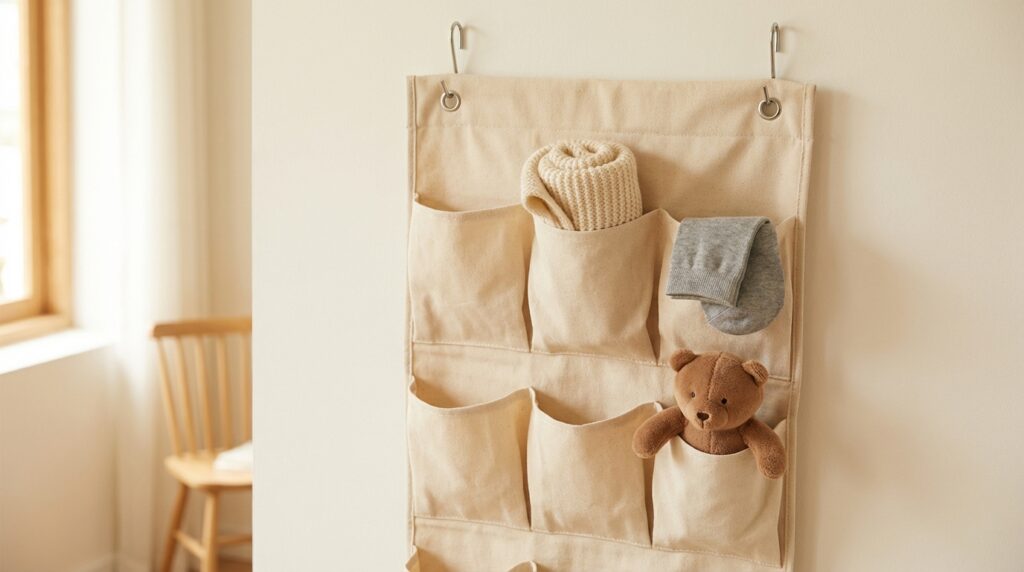
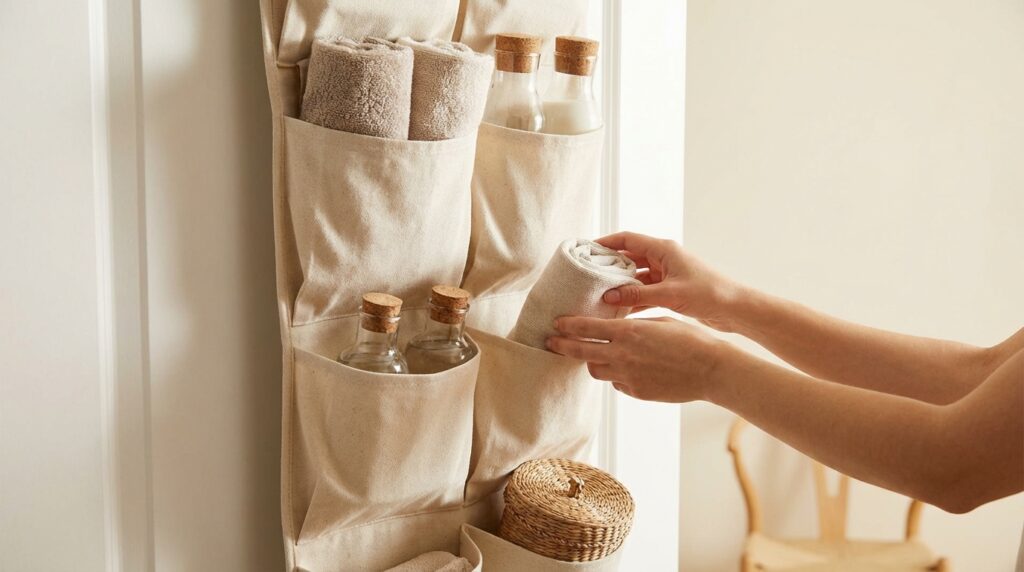
These are the classic over-the-door organizers most people picture. They typically hang from two hooks and feature rows of pockets—anywhere from 12 to 35 depending on the size. The fabric can be canvas, polyester, or a blend, and pocket depth varies quite a bit between products.
- Pros: Lightweight, affordable, soft on items, available in many colors
- Cons: Can sag over time if overloaded, not ideal for heavy items, pockets may stretch
These work beautifully for shoes, scarves, socks, small toys, or craft supplies. A common mistake is stuffing heavy items like full shampoo bottles into every pocket—the weight pulls the whole thing down and strains the hooks. Stick to lighter items or fill only the bottom pockets with heavier things.
Option: Mesh Pocket Organizers
Similar to fabric organizers but made with breathable mesh pockets. Based on user feedback, these tend to hold up well over time—some people report using them for shoes for two years or more without issues.
- Pros: Breathable (great for shoes or gym gear), easy to see contents, lightweight
- Cons: Small items can poke through mesh, less polished look
If you’re storing sneakers or workout shoes that might still be slightly damp, mesh is your friend. The airflow prevents that musty smell that builds up in closed fabric pockets.
Option: Clear Pocket Organizers
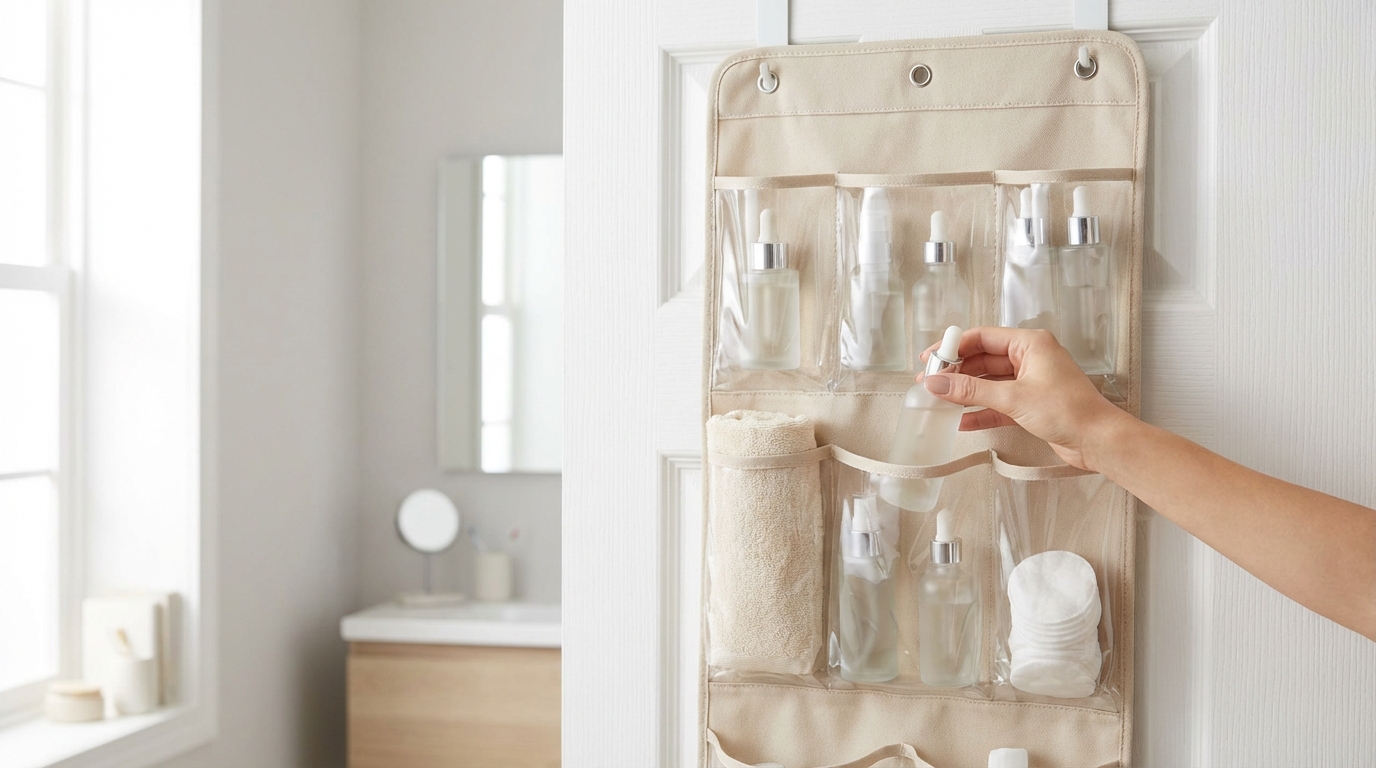
These use transparent vinyl or plastic pockets so you can see exactly what’s inside without digging around. They’re popular for bathrooms, jewelry, or makeup storage.
- Pros: Instant visibility, easy to wipe clean, great for small items
- Cons: Plastic can crack over time, looks less cozy, may feel cheap
If you’re someone who forgets what you own the moment it’s out of sight, clear pockets solve that problem. They’re also handy in rental bathrooms where you want to grab your toiletries quickly without unpacking a whole bag.
Option: Wire or Metal Shelf Organizers
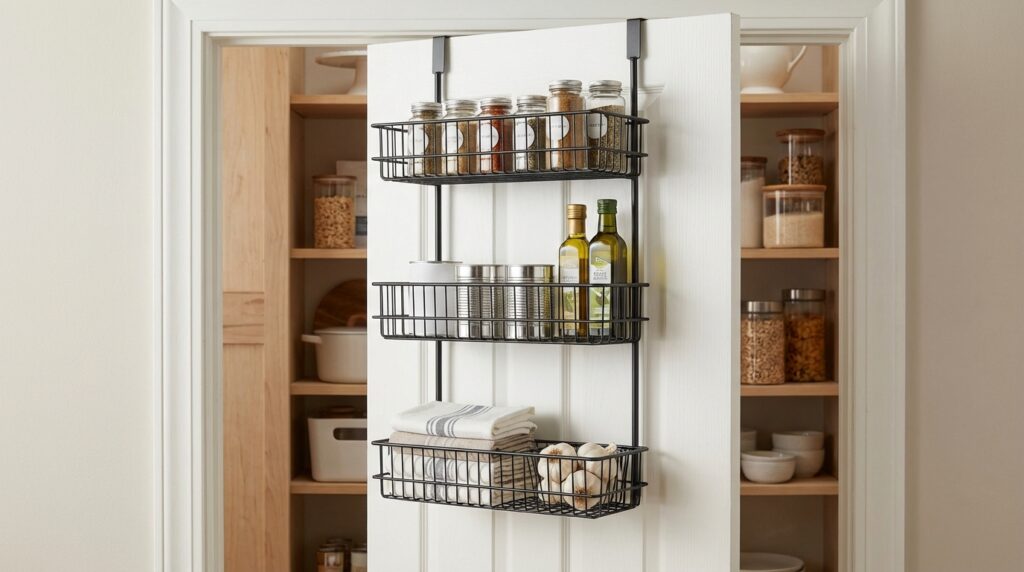
These are rigid organizers with actual shelves or baskets instead of pockets. They hook over the door and provide tiered storage—usually 3 to 6 levels. Some models are adjustable, letting you change the spacing between shelves.
- Pros: Sturdy, holds heavier items, adjustable options available, looks more polished
- Cons: Heavier, may scratch doors without padding, takes up more depth behind the door
Metal organizers shine in pantries and kitchens. They can handle canned goods, spice jars, cleaning supplies, or anything with real weight. Just check that your door can close fully—some of these stick out 4-5 inches and won’t work on doors with tight clearance.
Option: Tiered Basket Organizers
A hybrid between shelves and pockets, these feature wire or fabric baskets arranged vertically. They’re popular for bathrooms and nurseries.
- Pros: Baskets contain items better than flat shelves, good for bottles and jars
- Cons: Fewer compartments than pocket styles, can swing when door moves
If you live in a small apartment with a bathroom door that actually gets used (not just left open), basket-style organizers handle the movement better than rigid shelves that might rattle.
What to Check Before You Buy
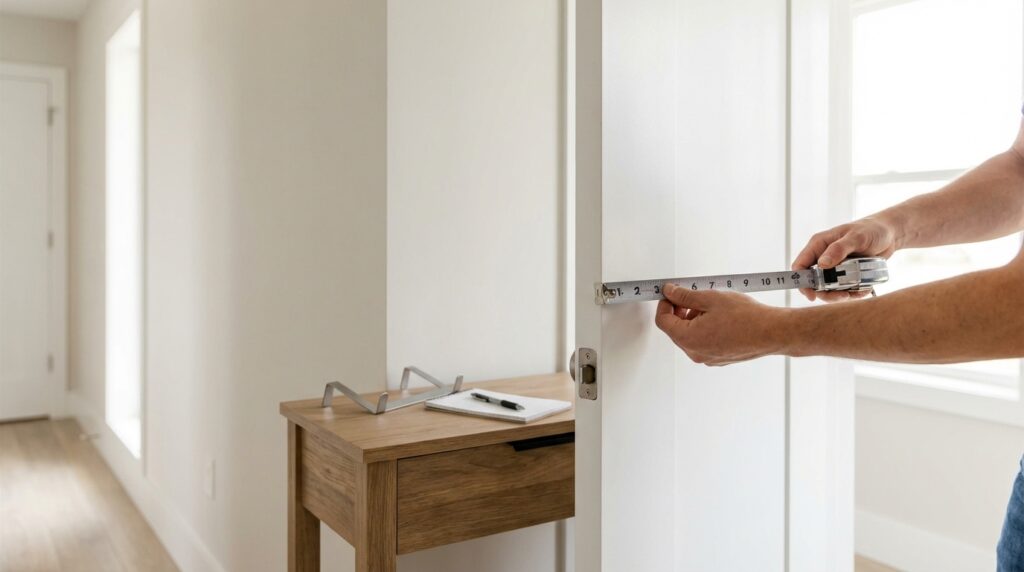
Not all over-the-door organizers fit all doors. Here’s what catches people off guard:
- Door thickness: Most hooks fit standard interior doors (1.375 inches), but if you have thick or hollow-core doors, measure first. Some organizers include adjustable hooks or padding.
- Door clearance: Will your door still close? Metal shelf organizers need 4-6 inches of clearance. Fabric pocket organizers need less—usually 2-3 inches.
- Weight capacity: This matters more than people realize. A fully loaded shoe organizer can weigh 20-40 pounds. Check the listed capacity and don’t exceed it.
- Hook style: Some use two large hooks at the top, others use multiple smaller hooks distributed along the length. Distributed hooks reduce stress on the door.
A quick tip: if you’re renting and worried about scratching the door, look for organizers with foam-padded or rubber-coated hooks. A folded washcloth between the hook and door works in a pinch too.
Common Mistakes (and How to Avoid Them)
- Overloading the top pockets: Weight should be distributed toward the bottom. Top-heavy organizers pull away from the door and stress the hooks.
- Ignoring door swing: If your door opens into a tight space, a bulky organizer might prevent it from opening fully. Measure the clearance when the door is open, not just closed.
- Buying based on pocket count alone: 35 tiny pockets aren’t better than 24 properly sized ones. Think about what you’re actually storing.
- Forgetting about door weight limits: Hollow-core doors can only handle so much. If your door feels flimsy, stick with lightweight fabric organizers.
- Skipping the “will I actually see this” test: An organizer on the inside of a closet door you rarely open becomes a black hole. Put frequently used items where you’ll actually access them.
Who This Is For (and Who It’s Not)
Over-the-door organizers are great for:
- Renters who can’t drill holes or install permanent storage
- Anyone in a small apartment, dorm, or RV where floor space is precious
- People who want quick access to everyday items (shoes, toiletries, cleaning supplies)
- Parents needing nursery storage without bulky furniture
They might not be ideal if:
- Your doors don’t close properly or have unusual thickness
- You need to store very heavy items (look into wall-mounted shelves instead)
- You prefer a minimalist look—even the nicest organizers add visual clutter
- Your door gets slammed frequently (the constant movement wears out hooks faster)
Frequently Asked Questions
Can over-the-door organizers damage my door?
They can leave minor scuffs or dents over time, especially metal hooks on painted doors. Using padded hooks or adding felt pads minimizes this. Most marks can be touched up with paint when you move out.
How much weight can these organizers hold?
It varies widely. Fabric pocket organizers typically handle 15-25 pounds total. Sturdier metal shelf organizers can hold 40 pounds or more. Always check the product specifications and distribute weight evenly.
Will my door still close with an organizer on it?
Usually yes, but it depends on the organizer’s depth and your door frame clearance. Fabric organizers rarely cause issues. Metal shelf organizers need more space—measure before buying.
Summary and Next Step
The best over-the-door organizer for small spaces depends entirely on what you’re storing and where. Fabric or mesh pocket organizers handle shoes and lightweight items affordably. Metal shelf organizers work better for pantries and heavier supplies. Clear pockets keep small items visible in bathrooms. Before buying, measure your door thickness and clearance, check the weight capacity, and think honestly about what you’ll actually store.
Start with one organizer in the spot that frustrates you most—maybe it’s the coat closet that’s become a shoe graveyard, or the bathroom cabinet that can’t fit one more bottle. Once you see how much space you reclaim, you’ll probably find a few more doors worth using.