
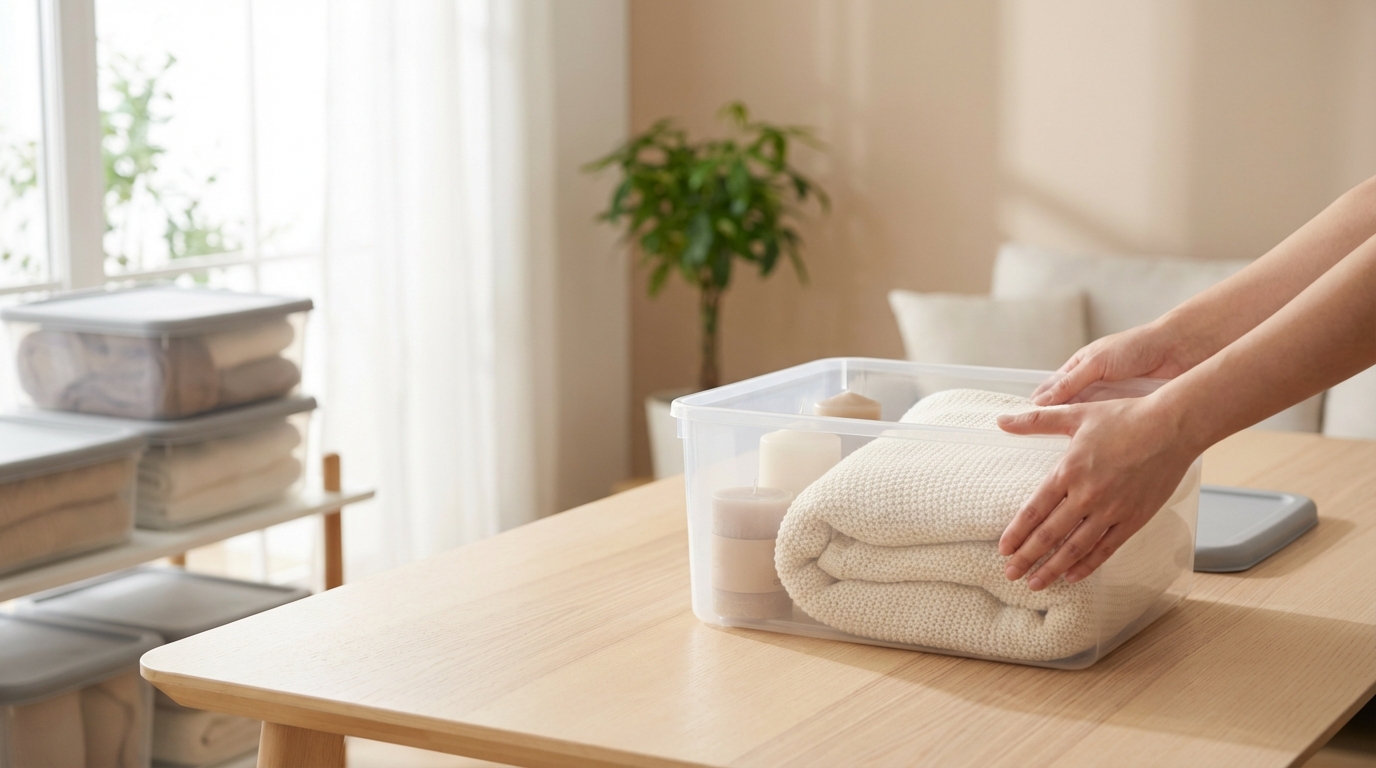
That moment when you pull out your favorite throw blanket in October and it smells like a forgotten gym bag? Preventable. Learning how to store seasonal items properly takes about 30 minutes of setup—and saves hours of frustration (plus the cost of replacing ruined candles and musty textiles). Whether dealing with a cramped apartment closet or a modest garage corner, these methods keep blankets fresh, candles intact, and decor ready for its next debut.
Why Seasonal Storage Goes Wrong
Most storage disasters come down to three culprits: moisture, temperature swings, and pests. Blankets stuffed into plastic bags trap humidity and develop that telltale musty smell. Candles left in hot attics melt into waxy puddles. Delicate ornaments tossed into cardboard boxes emerge chipped or crushed.
The fix isn’t buying expensive storage systems. It’s understanding what each item actually needs—and using what’s already around the house more strategically.
What You’ll Need for Seasonal Storage
- Clear plastic bins with secure lids (various sizes)
- Cotton storage bags or old pillowcases
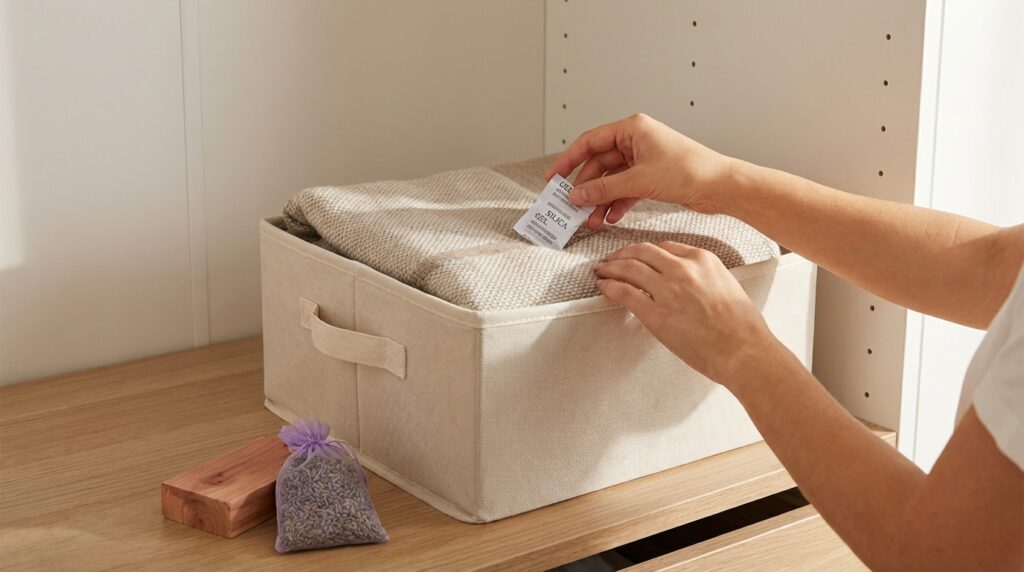
- Cedar blocks or lavender sachets (natural pest deterrents)
- Acid-free tissue paper
- Silica gel packets (save these from shoe boxes and vitamin bottles)
- Bubble wrap or packing paper
- Labels and a permanent marker
- Vacuum storage bags (optional, for bulky items)
Smart Tip: Before buying new bins, measure your actual storage space. A $15 bin that doesn’t fit is just clutter with a receipt. Sketch your closet or under-bed dimensions first—most people overestimate available space by 20-30%.
How to Store Blankets and Textiles
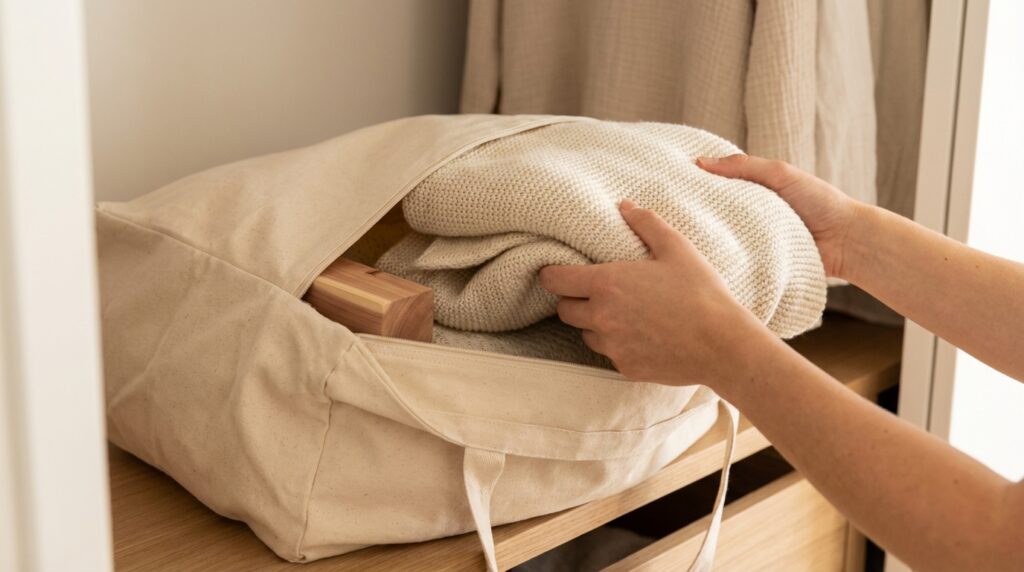
Blankets, throws, and seasonal bedding need to breathe. Plastic bags are the enemy here.
- Wash or dry clean all textiles before storing. Body oils and invisible stains attract pests and set permanently over months of storage.
- Make sure items are completely dry. Even slight dampness leads to mildew.
- Fold blankets loosely—tight compression creates permanent creases in some fabrics.
- Place in breathable cotton bags, old pillowcases, or fabric storage containers. Avoid sealed plastic.
- Add cedar blocks or lavender sachets between layers. Replace cedar blocks annually (light sanding refreshes the scent).
- Store in a cool, dry location away from direct sunlight. Closet shelves beat attics and basements.
For bulky comforters eating up precious closet real estate, vacuum storage bags work—but with caveats. Down and feather items lose loft when compressed long-term. Synthetic fills handle compression better. Limit vacuum storage to 6 months maximum, then let items decompress and re-store.
Counter-Intuitive Insight: Storing blankets with dryer sheets seems smart but can leave residue that attracts pests over time. Natural cedar or lavender works better for long-term storage.
How to Store Candles Without Melting or Cracking
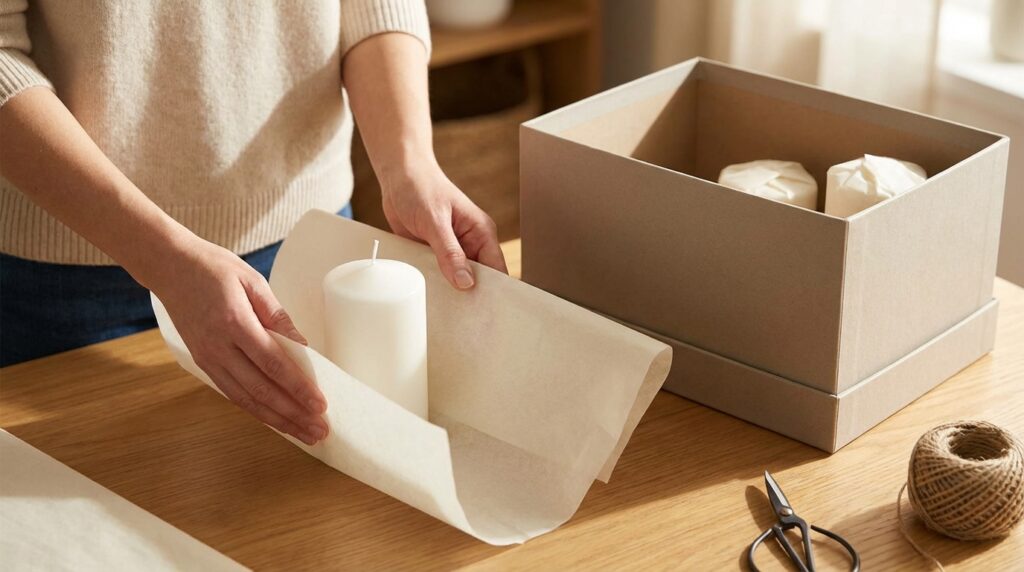
Candles are surprisingly fussy. Heat warps them, cold cracks them, and dust ruins the wax surface.
- Wrap each candle individually in tissue paper or packing paper. This prevents colors from transferring between candles and protects surfaces.
- Store upright when possible. Laying candles flat can cause warping, especially for tapers and pillars.
- Place wrapped candles in a sturdy box or bin—not loose in a drawer where they’ll roll and chip.
- Keep in climate-controlled spaces. Ideal temperature: 50-80°F (10-27°C). Attics and garages are usually too extreme.
- Add a silica gel packet to the container to absorb excess moisture.
Jar candles are more forgiving but still benefit from dust covers. The original lid works perfectly—or stretch plastic wrap over the opening. Dusty wax surfaces don’t burn evenly and can produce more soot.
Expect candles stored properly to last 12-18 months without noticeable scent loss. After that, fragrance fades regardless of storage method. Unscented candles last indefinitely.
How to Store Seasonal Decor Safely
Holiday ornaments, seasonal wreaths, and decorative items need protection from crushing, dust, and moisture.
Fragile Ornaments and Figurines
- Wrap each piece individually in acid-free tissue paper or bubble wrap.
- Use divided storage containers (ornament boxes with cardboard dividers work well) or create divisions with cardboard strips in regular bins.
- Fill empty spaces with crumpled packing paper to prevent shifting.
- Label boxes clearly: “Fragile – Glass Ornaments” beats “Christmas Stuff.”
- Store heavier items on the bottom, lighter pieces on top.
Wreaths and Larger Decor
Hanging wreaths inside garment bags protects them from dust and crushing. Dedicated wreath storage boxes exist but aren’t necessary—a large garbage bag with a hanger hole cut in the bottom works identically for a fraction of the cost.
Artificial flowers and greenery benefit from a light dusting before storage. Compressed arrangements lose their shape, so give them space or hang them.
String Lights
The tangled light ball is a holiday tradition nobody wants. Wrap lights around cardboard pieces (cut from shipping boxes), empty paper towel rolls, or plastic hangers. Secure ends with tape or twist ties. Store in a bin where they won’t get crushed—broken bulbs are a safety hazard.
Small Space Storage Solutions
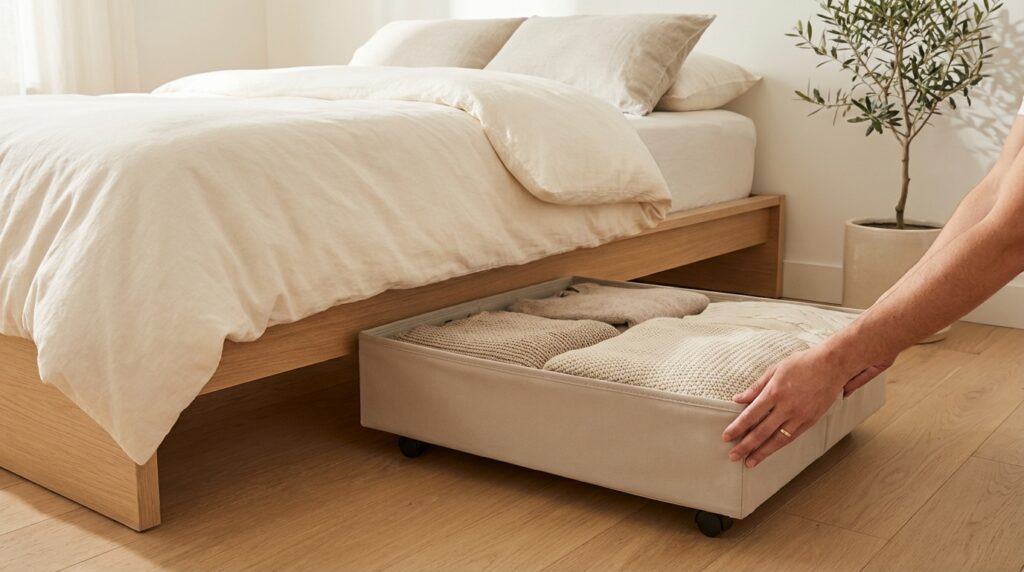
Limited square footage demands creativity. These approaches maximize storing seasonal decor without sacrificing living space:
- Under-bed storage: Low-profile bins fit seasonal textiles perfectly. Measure bed clearance first—most under-bed containers are 6 inches tall, but clearance varies.
- Top-of-closet shelves: Ideal for lightweight items like decor and candles. Use clear bins to see contents without climbing.
- Behind-door organizers: Over-door shoe organizers hold small decor items, candles, and sachets.
- Suitcase storage: Off-season luggage makes excellent blanket storage. It’s already taking up space—might as well use the interior.
- Ottoman or bench storage: Dual-purpose furniture hides seasonal throws in plain sight.
Vertical space is usually underutilized. Stackable bins and shelf risers can double closet capacity without renovation.
Seasonal Storage Rotation Schedule
A simple rotation system prevents the “where did I put that?” scramble:
| Season | Store Away | Bring Out |
|---|---|---|
| Spring (March-April) | Heavy blankets, winter decor | Light throws, spring decor |
| Summer (June) | Spring decor, medium-weight textiles | Outdoor items, summer candles |
| Fall (September-October) | Summer items | Cozy blankets, autumn/Halloween decor |
| Winter (November-December) | Fall decor | Holiday decorations, heavy throws |
Scheduling 30 minutes for seasonal swaps—rather than doing it frantically the night before guests arrive—makes the whole process calmer and more thorough.
Frequently Asked Questions
Can I store seasonal items in the garage?
Only if the garage is climate-controlled or items are temperature-resistant. Textiles and candles suffer in extreme heat or cold. Hard plastic decor and artificial greenery handle garage conditions better.
How do I prevent musty smells in stored blankets?
Ensure items are completely dry before storing, use breathable containers (not sealed plastic), and add moisture absorbers like silica gel packets. Cedar and lavender help but don’t fix existing moisture problems.
Should I store candles in the refrigerator?
Not recommended. Temperature fluctuations when removing them cause condensation, which affects burn quality. A cool closet shelf works better than refrigeration.
How often should I check stored items?
A quick inspection every 3-4 months catches problems early—moisture buildup, pest activity, or container damage. Takes five minutes and prevents unpleasant surprises.
Wrapping Up
Proper seasonal storage isn’t about perfection or Pinterest-worthy organization systems. It’s about pulling out blankets that smell fresh, candles that haven’t melted into modern art, and ornaments that survived another year intact.
Start with one category—blankets are usually the easiest win. Grab some cotton bags or repurpose old pillowcases, add cedar blocks, and find a closet shelf. That single improvement takes 15 minutes and eliminates the musty blanket problem permanently.
The rest can happen gradually. Small, consistent upgrades to seasonal organization beat ambitious overhauls that never get finished.