
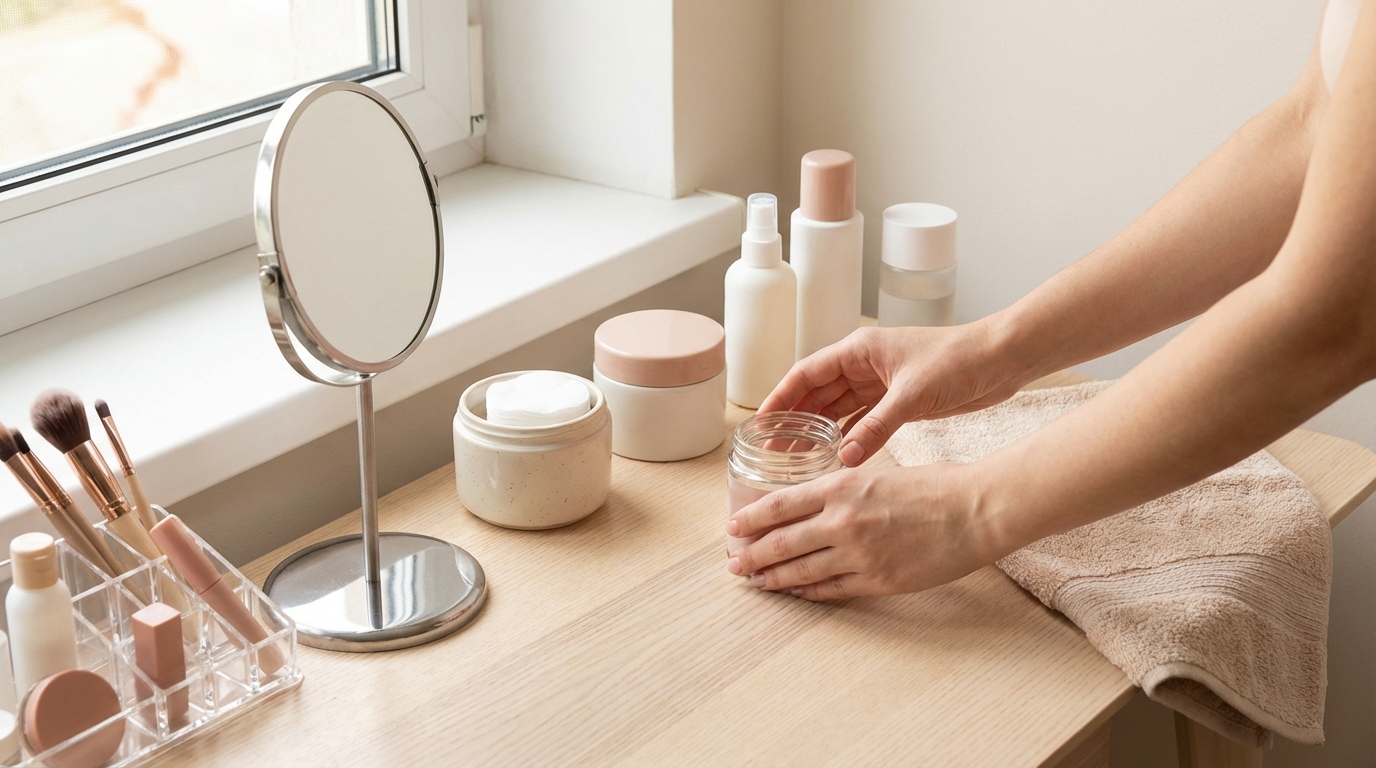
You finally carved out a little spot for your makeup and skincare—maybe it’s a narrow desk by the window, a floating shelf in the bedroom, or literally just a corner of your dresser. And now you’re staring at it, wondering how to make a tiny vanity actually work without everything toppling over or looking like a cluttered mess. The good news: small spaces can feel surprisingly luxurious with a few smart tweaks. In this post, you’ll find practical ideas to maximize every inch of your makeup corner, keep your essentials organized, and create a space that actually makes your morning routine easier.
The trick isn’t buying a bunch of fancy organizers. It’s about being intentional with what stays on that surface and finding clever ways to use vertical space. Let’s get into it.
Quick Ideas at a Glance
- Go vertical with wall-mounted shelves, magnetic strips, or pegboards
- Use clear acrylic organizers so you can see everything at once
- Keep only daily-use items on the surface; store the rest nearby
- Add a small mirror with built-in storage or lighting
- Use trays or small dishes to corral loose items like hair ties and clips
- Rotate seasonal products instead of cramming everything in one spot
Start by Editing What You Actually Use
Before you buy a single organizer, take everything off your vanity or makeup corner and sort through it. This sounds tedious, but it takes ten minutes and makes a huge difference. Most people discover they have three half-empty foundations, mascara from two years ago, and skincare samples they forgot existed.
Keep only what you reach for regularly—your everyday makeup, your current skincare lineup, and a few tools. Everything else can live in a drawer, a small bin under the bed, or a bathroom cabinet. A tiny vanity works best when it holds your “first string” products, not your entire collection.
A common mistake is treating the vanity like a display shelf for everything you own. If you’re constantly moving things around to find your concealer, the setup isn’t serving you. Edit ruthlessly, and suddenly that small space feels a lot more functional.
The “Would I Grab This Tomorrow?” Test
When deciding what stays, ask yourself: would I actually use this tomorrow morning? If the answer is no, it doesn’t need prime real estate. This keeps your tiny vanity focused on what matters and prevents the slow creep of clutter that happens when you add “just one more thing” every week.
Use Vertical Space Like It’s Free Real Estate
When your surface area is limited, walls become your best friend. A small floating shelf above your vanity can hold perfumes, a plant, or a cute cup with your brushes. Pegboards are another option—they look a bit more casual, but you can hang everything from mirrors to small baskets.
Magnetic strips (the kind people use for kitchen knives) work surprisingly well for bobby pins, tweezers, and metal nail tools. Stick one on the wall or inside a cabinet door, and suddenly those tiny items aren’t rolling around loose.
If you’re renting and can’t drill holes, look for adhesive hooks and shelves rated for a few pounds. They’re not as sturdy as mounted options, but they handle lightweight items like headbands, small mirrors, or a single shelf of skincare just fine.
Shortcut if You’re Short on Time
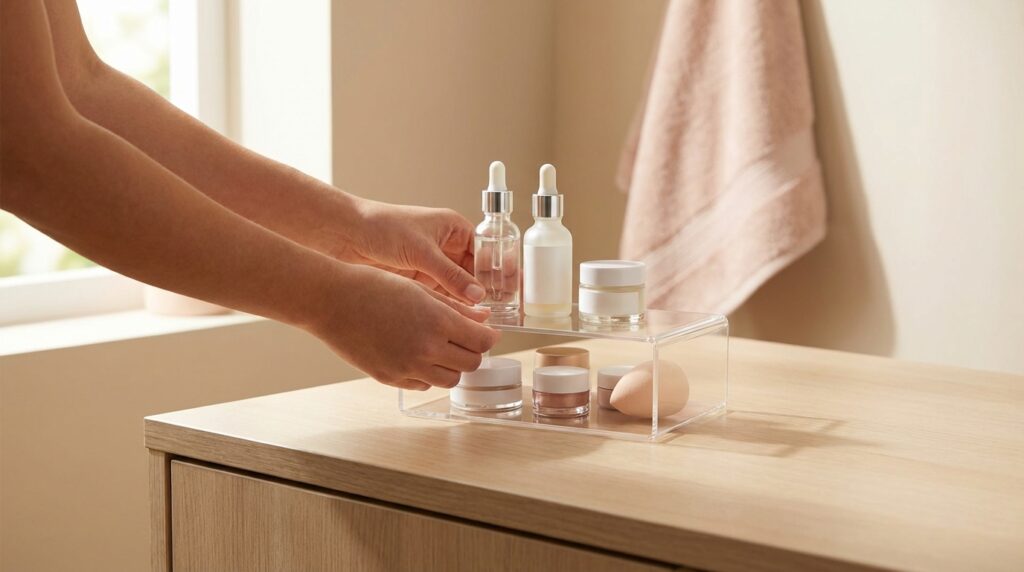
- Grab a single acrylic riser—it instantly doubles your usable surface by creating two levels
- Use a wall-mounted makeup mirror instead of a standing one to free up desk space
- Hang a small fabric pocket organizer on the wall for brushes and pencils
- Repurpose a spice rack as a mini shelf for nail polishes or small bottles
Smart Storage Solutions That Actually Fit
Not every organizer is designed for small spaces. Those giant spinning towers look great in videos, but they eat up half your surface and usually have compartments that don’t fit your actual products. For a tiny vanity, think smaller and more modular.
Clear acrylic drawers or stackable trays let you see what you have without digging. A three-drawer mini unit can hold lipsticks, eyeliners, and small palettes without taking up much room. If you prefer a warmer look, small woven baskets or ceramic dishes work too—just make sure you can still see or easily access what’s inside.
One practical tip: measure your space before buying anything. It sounds obvious, but a lot of people end up with organizers that are two inches too wide or too tall for the spot they had in mind. A quick measurement saves a return trip.
Don’t Forget Drawer Dividers
If your vanity has even one small drawer, dividers turn it from a junk pit into actual usable storage. Adjustable bamboo dividers or simple plastic trays keep things separated so you’re not fishing around for your eyelash curler every morning. This is especially helpful for tiny items like hair clips, samples, and single-use masks.
Lighting Makes a Bigger Difference Than You Think
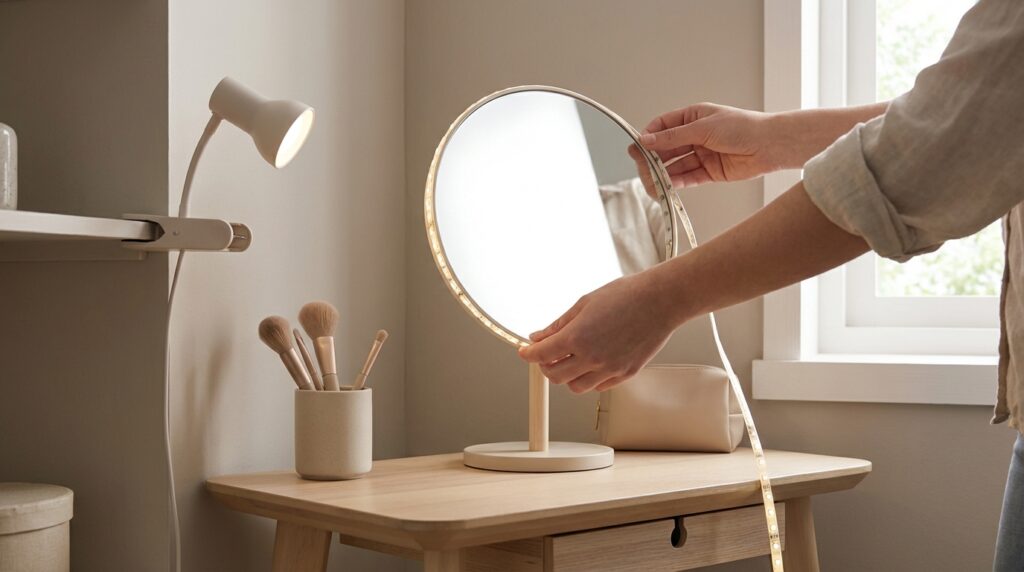
A makeup corner with bad lighting is basically a guessing game. You think your foundation matches, and then you step outside and realize you look like you’re wearing a mask. If your tiny vanity is in a dim corner, adding a small light source changes everything.
LED strip lights are inexpensive and can be stuck around a mirror or under a shelf. A small ring light or clip-on lamp works too, especially if you do your makeup early in the morning before natural light kicks in. The goal is even, front-facing light—overhead lighting alone tends to cast shadows under your eyes and chin, which isn’t helpful when you’re trying to blend.
If you’re working with natural light, position your mirror so the light hits your face, not the back of your head. A spot near a window is ideal, but even angling a small mirror toward the light source helps.
Keep It Clutter-Free Long Term
The real challenge with a tiny vanity isn’t setting it up—it’s keeping it that way. Small spaces show clutter immediately. One week of tossing things down without putting them back, and suddenly you can’t find anything.
A simple habit that helps: at the end of each week, spend two minutes putting everything back in its spot and tossing anything empty or expired. It’s not exciting, but it prevents the slow avalanche of products that makes small spaces feel chaotic.
Another trick is rotating products seasonally. In summer, you might use lighter moisturizers and SPF daily; in winter, heavier creams and lip balms take priority. Instead of cramming everything onto your vanity year-round, store off-season items elsewhere and swap them out as needed.
Common Mistakes to Avoid
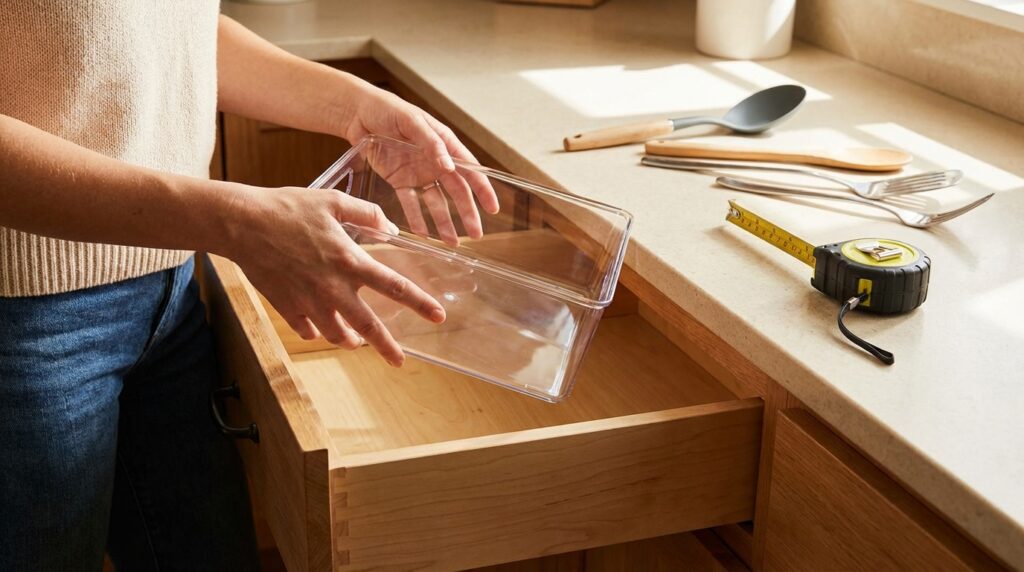
- Buying organizers before measuring your space
- Keeping products you haven’t touched in months on prime real estate
- Ignoring vertical space and trying to fit everything on the surface
- Using opaque containers that hide what’s inside (you’ll forget it exists)
- Skipping good lighting and then wondering why your makeup looks off
Frequently Asked Questions
What’s the best surface size for a tiny vanity?
Even a surface as small as 12 by 18 inches can work if you’re strategic. The key is keeping only essentials on top and using vertical storage for the rest. A narrow floating desk or a small corner shelf can be enough for a functional makeup corner.
How do I make a tiny vanity feel less cramped?
Use a mirror to create the illusion of more space, keep the color palette simple, and avoid overcrowding the surface. A single small plant or decorative item adds personality without making things feel cluttered.
Can I create a makeup corner without a dedicated desk?
Absolutely. A wall-mounted mirror with a small floating shelf underneath, a rolling cart you can tuck away, or even a tray on your dresser can serve as a makeup corner. It’s more about having a designated spot than having furniture.
How often should I reorganize my tiny vanity?
A quick tidy once a week keeps things manageable. A deeper edit—where you check expiration dates and reassess what you’re actually using—every three to six months is usually enough.
Summary and Next Step
A tiny vanity or makeup corner doesn’t have to feel cramped or chaotic. By editing down to your daily essentials, using vertical space, choosing the right small-scale organizers, and adding decent lighting, you can create a spot that’s both functional and pleasant to use. The key is being intentional about what earns a place on that limited surface.
Your next step: pick one idea from this post and try it this week. Maybe it’s finally adding that floating shelf, or just clearing off everything and starting fresh with only what you actually use. Small changes add up, and your future self will thank you every time you sit down to get ready.