
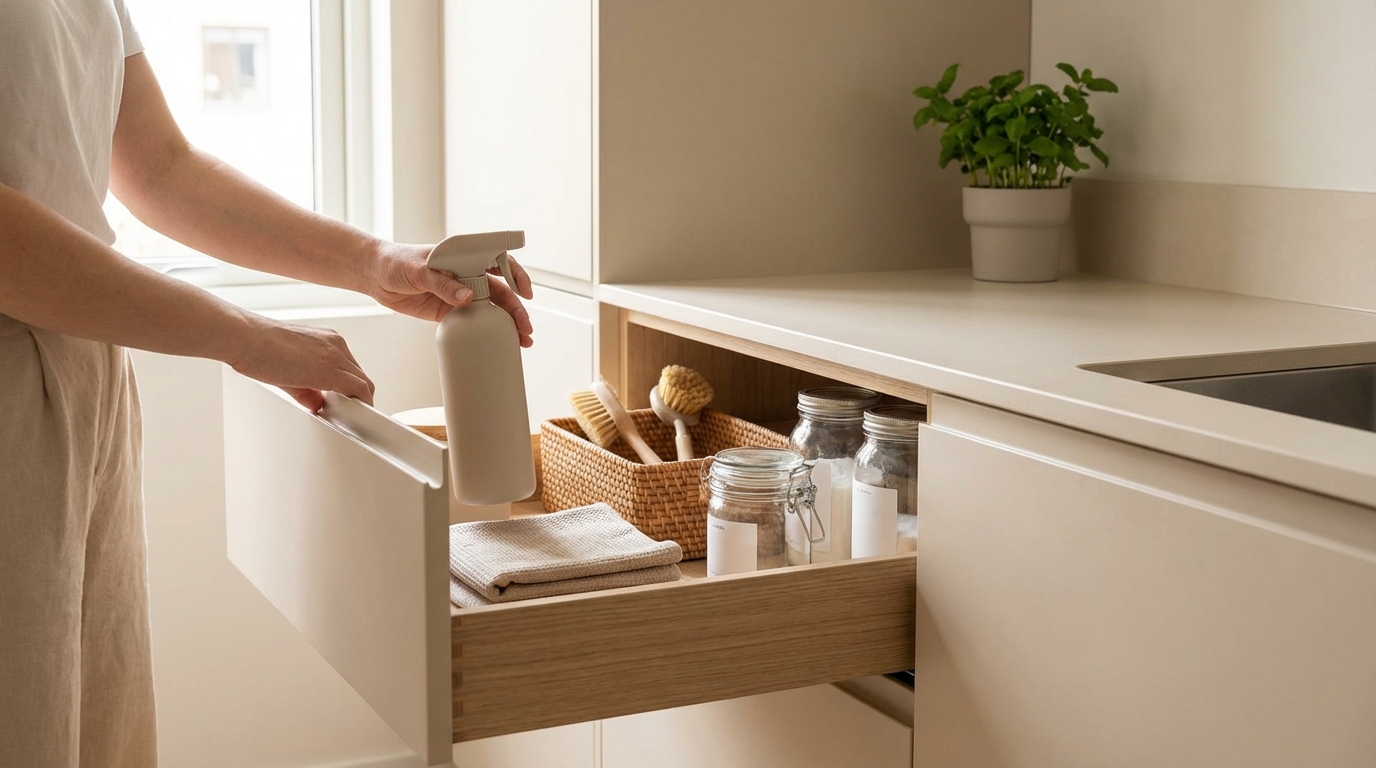
You open the cabinet under your kitchen sink and three bottles tumble out. The mop is wedged behind the bathroom door, the vacuum lives in a corner of your bedroom, and you’re pretty sure there’s a bottle of glass cleaner somewhere in the closet—maybe. When you live in a tiny apartment, figuring out how to store cleaning supplies without losing precious space (or your sanity) feels like solving a puzzle with missing pieces.
The good news? Small-space storage is less about buying fancy organizers and more about rethinking where things can actually go. By the end of this guide, you’ll have a clear system for corralling your cleaning supplies, a few clever spots you probably haven’t considered, and some practical ways to keep everything accessible without cluttering up your limited square footage.
Quick Steps to Organize Cleaning Supplies in a Small Space
- Declutter first—toss expired products and duplicates
- Group supplies by task (bathroom, kitchen, floors)
- Use vertical space: door-mounted racks, wall hooks, tension rods
- Consolidate into one portable caddy for daily cleaning
- Store bulky items (mop, broom, vacuum) in overlooked spots like closet corners or behind doors
What You’ll Need
- A portable cleaning caddy or bucket with a handle
- Over-the-door organizer or adhesive hooks
- Tension rod (optional, for under-sink storage)
- Small bins or baskets for grouping products
- Labels (optional but helpful)
You don’t need to buy everything at once. Start with what you have—a shoebox works as a bin, and a reusable shopping bag can hold rags temporarily. The goal is containment, not perfection.
Step-by-Step: Setting Up Your Cleaning Supply Storage
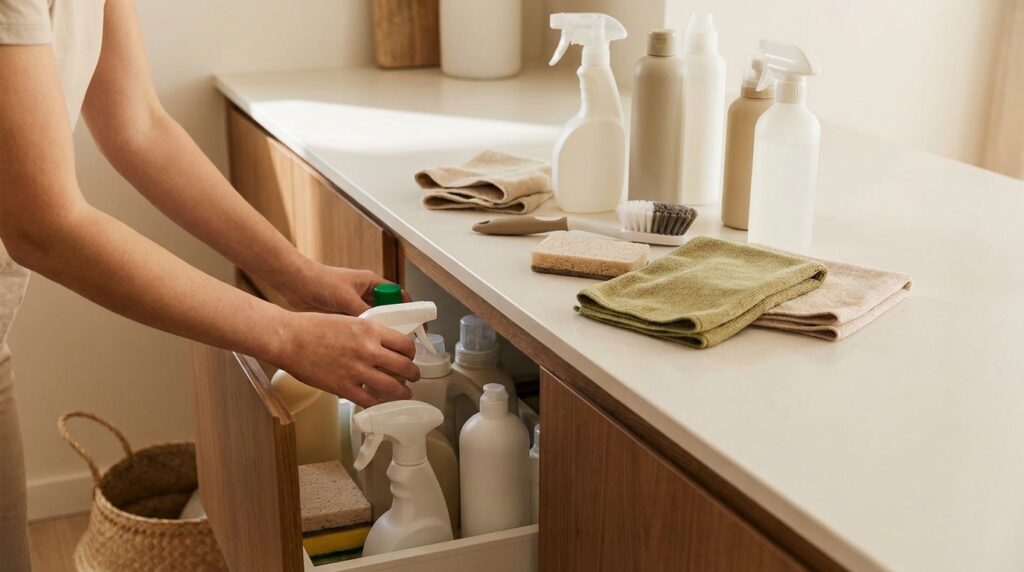
Step 1: Pull everything out. Yes, everything. Gather every cleaning product, sponge, rag, and random spray bottle from around your apartment. Lay it all out on the floor or a table so you can see what you’re working with. Most people are surprised by how many duplicates or half-empty bottles they’ve accumulated.
Step 2: Declutter ruthlessly. Toss anything expired, dried out, or that you genuinely never use. If you have three different all-purpose cleaners, pick your favorite and let the others go. In a tiny apartment, every item needs to earn its spot.
Step 3: Group by task or room. Create small piles: bathroom cleaning, kitchen cleaning, floor care, and general dusting. This helps you see what you actually need and makes it easier to grab the right supplies when it’s time to clean.
Step 4: Choose your main storage zone. In most small apartments, this is under the kitchen or bathroom sink. If both are too cramped, consider a narrow utility cart that can slide into a closet or the gap between your fridge and wall.
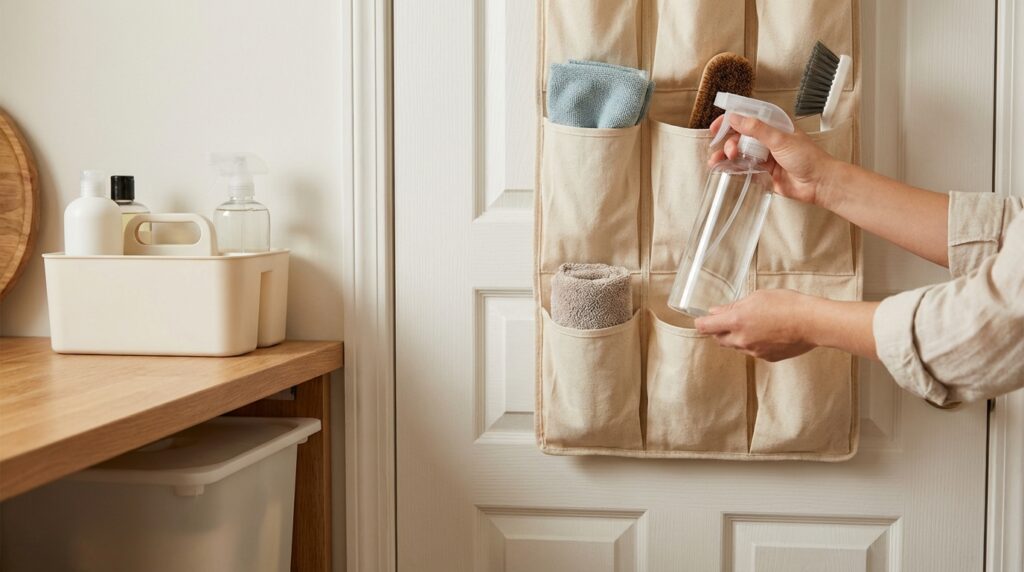
Step 5: Go vertical. Install an over-the-door organizer on a closet or pantry door for spray bottles and smaller items. Use adhesive hooks on the inside of cabinet doors to hang brushes or dustpans. A tension rod under the sink creates a “second shelf” for hanging spray bottles by their triggers.
Step 6: Create a grab-and-go caddy. Fill a portable caddy with your most-used supplies—an all-purpose cleaner, microfiber cloth, glass cleaner, and a scrub brush. This becomes your daily cleaning kit that you can carry from room to room without hunting for products.
Shortcut If You’re Short on Time
- Skip the full reorganization—just create one caddy with essentials and stash everything else in a single bin under the sink
- Use a hanging shoe organizer on the back of any door for instant vertical storage
- Consolidate to multi-purpose products (one cleaner for kitchen and bathroom) to reduce the number of bottles
- Stick adhesive hooks inside cabinet doors today; organize the rest this weekend
Clever Storage Spots You Might Be Overlooking
When square footage is tight, you have to get creative. Here are some often-ignored spaces that work surprisingly well for cleaning supplies.
The Back of Doors
Closet doors, bathroom doors, even the door to your utility closet (if you’re lucky enough to have one)—these are prime real estate. An over-the-door organizer with clear pockets keeps spray bottles visible and accessible. No drilling required, and you can take it with you when you move.
The Gap Between Appliances
That awkward sliver of space between your fridge and the wall or between your washer and dryer? A slim rolling cart fits perfectly there. Use it for cleaning supplies, and you’ve turned dead space into functional storage.
High Shelves in Closets
Products you don’t use daily—like carpet cleaner or specialty stain removers—can live on a high shelf in your coat closet or bedroom closet. Just keep them in a bin so they don’t topple when you reach for your winter coat.
Under the Bathroom Sink (Reimagined)
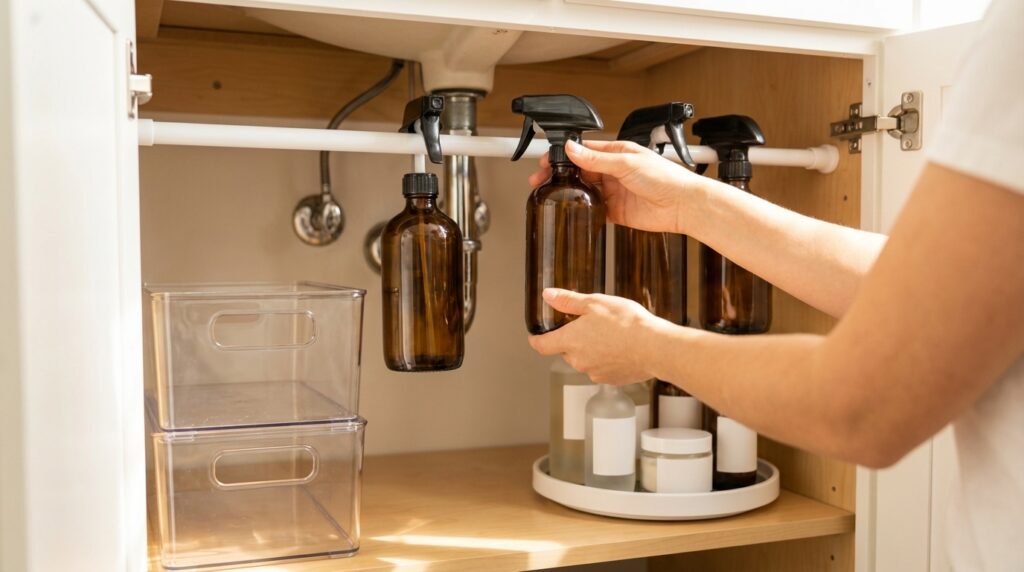
If your under-sink area is a chaotic mess, a few small changes help. Add a lazy Susan for bottles so nothing gets lost in the back. Use stackable bins to create layers. And that tension rod trick? It genuinely works—hang spray bottles by their triggers to free up floor space in the cabinet.
Common Mistakes (and How to Avoid Them)
- Buying in bulk when you don’t have room. That giant jug of floor cleaner might be a great deal, but if it doesn’t fit anywhere, it becomes clutter. Buy smaller sizes or decant into a smaller bottle.
- Storing everything under one sink. Spread supplies across zones. Bathroom cleaners can live in the bathroom; kitchen supplies stay in the kitchen. Less walking, less digging.
- Ignoring vertical space. Flat surfaces fill up fast. Walls, doors, and the insides of cabinets offer storage without eating into your floor space.
- Keeping products “just in case.” If you haven’t used that specialty granite polish in two years and you don’t have granite counters, let it go.
- Overcomplicating the system. If your storage setup requires a manual to understand, you won’t maintain it. Simple beats elaborate every time.
Making It Work Long-Term
A common issue with small-space organization is that systems fall apart after a few weeks. The trick is building habits that match your real life, not an idealized version of it.
Keep your grab-and-go caddy stocked and in the same spot. When you finish a product, toss the empty bottle immediately instead of letting it linger. Do a quick five-minute check once a month to clear out anything expired or unused. If you notice supplies migrating to random spots around your apartment, that’s a sign your main storage zone isn’t convenient enough—adjust accordingly.
If you live with roommates or a partner, make sure everyone knows where things go. A simple label on a bin or basket removes the guesswork and keeps the system running smoothly.
Frequently Asked Questions
How do I store a mop and broom in a tiny apartment?
Wall-mounted hooks or a broom holder on the back of a closet door work well. Some people store them in the shower when not in use, or lean them in the corner of a coat closet. If you’re really tight on space, consider a compact spray mop with a removable handle.
Is it safe to store cleaning supplies under the kitchen sink?
Generally yes, but keep a few things in mind. Don’t store chemicals near food. Make sure bottles are sealed tightly to avoid leaks. If you have pets or small children visiting, use childproof cabinet locks. And never mix different cleaning products in the same container—some combinations create dangerous fumes.
What’s the best way to store cleaning supplies if I don’t have cabinets?
A utility cart on wheels is your best friend. You can roll it into a closet, tuck it beside the fridge, or keep it in the bathroom. Alternatively, a sturdy bin with a lid can sit on a closet shelf or even slide under your bed.
How many cleaning products do I actually need?
Fewer than you think. Most people can get by with an all-purpose cleaner, a glass cleaner, a bathroom-specific cleaner (or a DIY vinegar solution), dish soap, and a floor cleaner. Add microfiber cloths, a scrub brush, and a sponge, and you’re covered for daily tasks.
Summary and Next Step
Storing cleaning supplies in a tiny apartment comes down to three things: decluttering what you don’t need, using vertical and hidden spaces, and keeping your most-used products in one portable spot. You don’t need a Pinterest-perfect setup—you need a system that actually works when you’re tired on a Sunday afternoon and just want to wipe down the counters.
Your next step? Grab a bag and do a quick purge of expired or duplicate products. Even ten minutes of decluttering makes the rest of the process easier. Once you’ve cleared the excess, the right storage solution usually becomes obvious.