
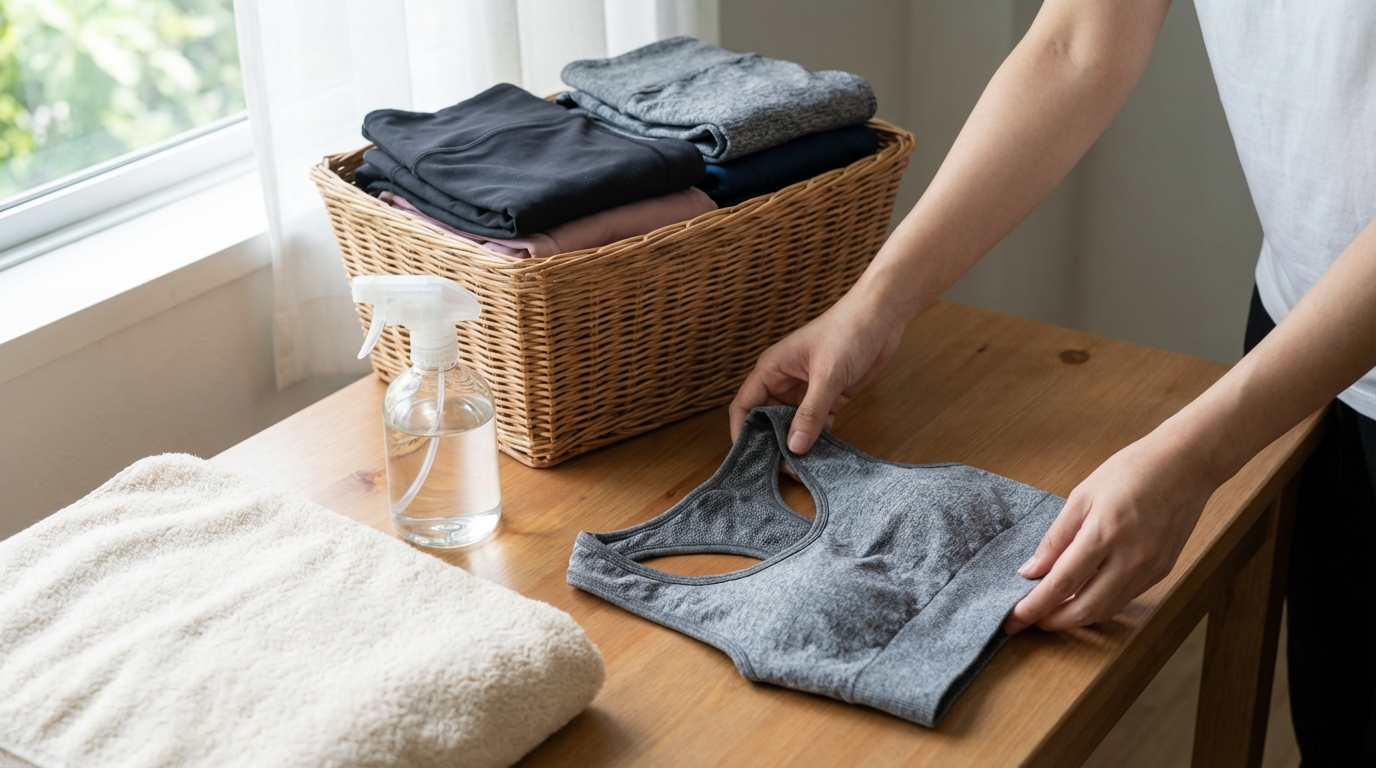
The biggest mistake with gym clothes? Tossing them in a hot wash with regular detergent and fabric softener. That combo actually traps odor-causing bacteria deeper into synthetic fibers. Learning how to care for workout clothes to avoid odor buildup comes down to a few counterintuitive habits—cold water, skipping the softener, and drying them properly. Get these right, and that “permanent gym smell” disappears.
Activewear is designed to wick sweat away from skin, which is great mid-workout but creates a perfect breeding ground for bacteria afterward. Those moisture-wicking fabrics (polyester, nylon, spandex blends) have tiny channels that trap oils, dead skin cells, and bacteria. Regular cotton-focused laundry routines don’t cut it here.
Why Synthetic Workout Gear Holds Onto Smell
Cotton absorbs moisture and releases it relatively easily during washing. Synthetic performance fabrics work differently—they’re hydrophobic, meaning they repel water while still moving sweat vapor. The downside: body oils and bacteria cling to these fibers stubbornly.
Here’s what’s actually happening:
- Bacteria feed on sweat residue and produce odor as a byproduct
- Body oils coat synthetic fibers and don’t dissolve in standard detergent
- Fabric softener leaves a waxy residue that seals bacteria in
- Heat from hot water and dryers “sets” odors into the fabric
This explains why gym clothes can smell fine out of the wash but turn funky within 10 minutes of your next workout. The bacteria weren’t killed—they were just dormant.
What You Need for Odor-Free Activewear
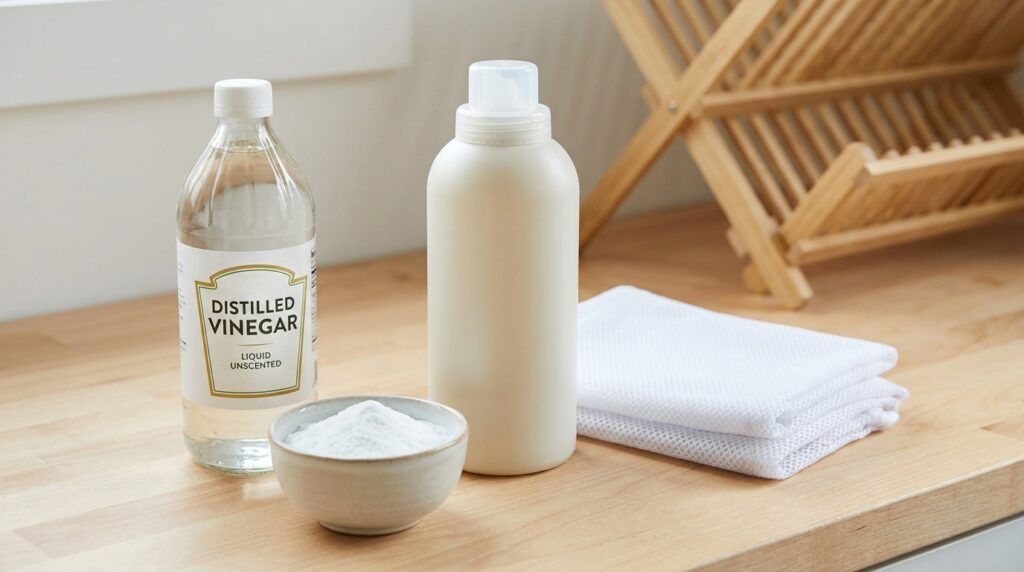
No specialty products required. Most of these are already in your laundry room or kitchen.
- White distilled vinegar (not apple cider—it can stain)
- Baking soda
- Unscented liquid detergent (or sport-specific detergent if preferred)
- Mesh laundry bags for delicates
- A drying rack or clothesline
Optional but helpful: enzyme-based laundry boosters, which break down protein-based stains and odors. These run about $8-12 and last months.
Step-by-Step: Washing Workout Clothes the Right Way
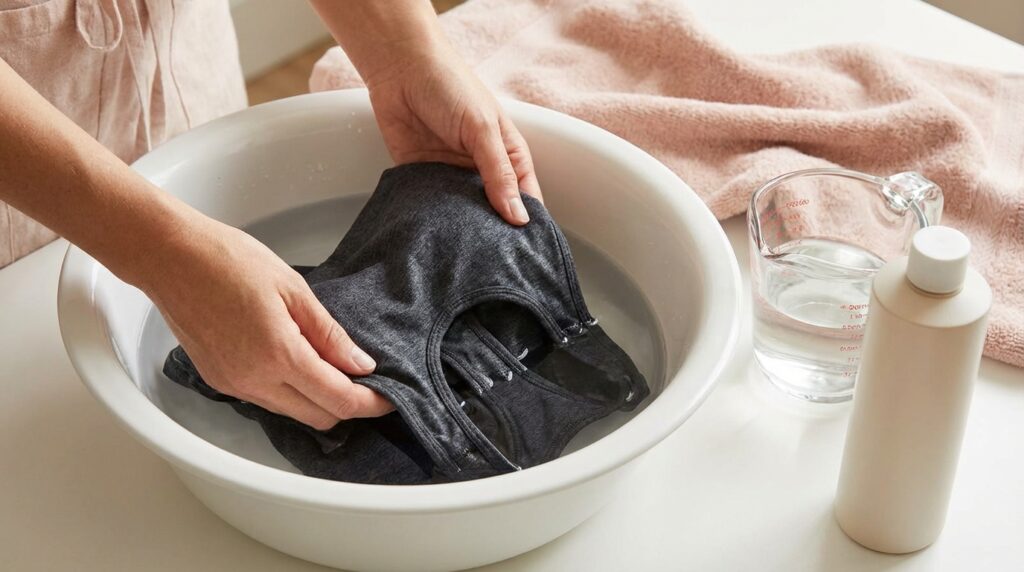
This routine adds maybe 2 minutes to your normal laundry process but makes a noticeable difference within one or two washes.
- Turn clothes inside out. Most bacteria and sweat residue sits on the inside surface that touched your skin. Exposing this side to water and detergent directly improves cleaning.
- Pre-soak heavily worn items. Fill a sink or basin with cold water and add 1 cup of white vinegar. Submerge the smelliest pieces for 15-30 minutes. Vinegar’s acidity breaks down bacteria without damaging elastic fibers.
- Use cold water only. Hot water can degrade spandex and elastane over time, plus it doesn’t clean synthetics better. Cold water is gentler and just as effective with the right detergent.
- Add detergent sparingly. More soap doesn’t mean cleaner clothes. Excess detergent leaves residue that traps future odors. Use about half the recommended amount for a regular load.
- Skip fabric softener entirely. This is non-negotiable for performance fabrics. Softener coats fibers with a slick layer that blocks moisture-wicking and seals in bacteria.
- Add 1/2 cup baking soda to the drum. This neutralizes acids and boosts detergent effectiveness without leaving residue.
- Wash on a gentle or delicate cycle. Aggressive agitation breaks down stretchy fibers faster. A gentler cycle extends the life of compression gear and sports bras.
- Air dry whenever possible. High heat from dryers degrades elastic and can bake in any remaining odor. Hang items on a drying rack or lay flat. Most activewear dries within a few hours anyway.
Smart Tip: If you can’t wash gym clothes immediately, don’t seal them in a gym bag or hamper. Hang them somewhere with airflow—even over a shower rod—until laundry day. Bacteria multiply fastest in warm, damp, enclosed spaces.
Between-Wash Habits That Prevent Gym Clothes Odor
Washing technique matters, but what happens before laundry day matters just as much.
Don’t let sweaty clothes sit balled up. Even a few hours in a gym bag creates a bacteria explosion. Spread them out or hang them as soon as possible.
Shower before working out (when practical). This sounds backward, but starting with cleaner skin means less bacteria transfer to clothing. A quick rinse removes surface oils and dead skin cells that feed odor-causing microbes.
Rotate your gear. Wearing the same leggings three times a week means they never fully dry or air out between uses. Having 2-3 sets in rotation gives each piece time to breathe.
Spot-treat problem areas. Underarms and waistbands trap the most bacteria. A quick spray of diluted vinegar (1:1 with water) on these zones after wearing can hold odor at bay until wash day.
Common Mistakes That Lock In Smell
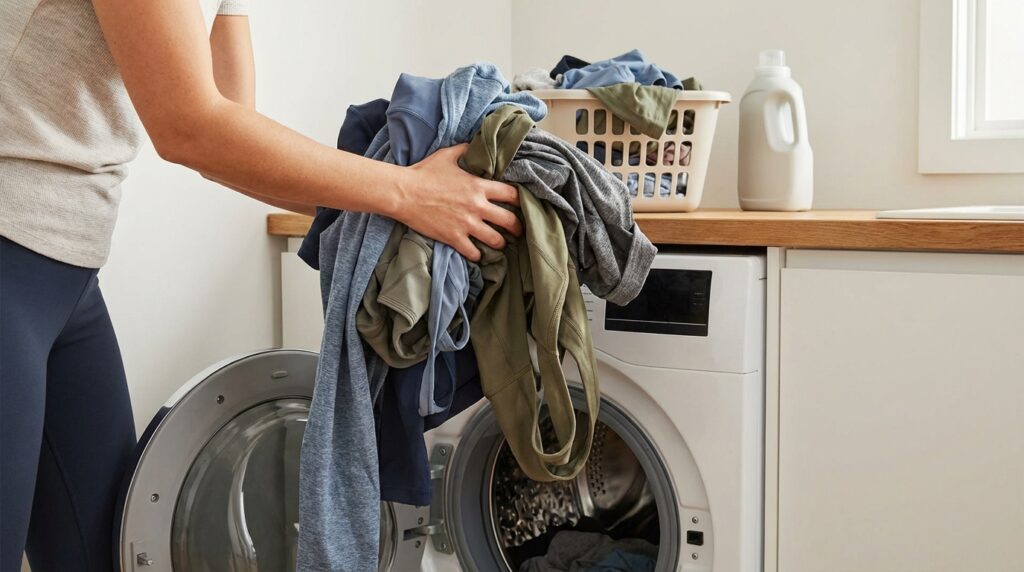
Even with good intentions, a few habits sabotage freshness:
Overloading the washer. Clothes need room to move and rinse properly. Cramming a week’s worth of activewear into one load means detergent and water can’t reach every surface. Wash workout gear in smaller batches.
Using too much detergent. Counterintuitive, but excess soap builds up in fabric over time. This residue attracts dirt and bacteria. Measure carefully—or use slightly less than the bottle suggests.
Drying on high heat. The dryer’s hot setting feels efficient but damages elastic fibers and can permanently set odors that weren’t fully removed in the wash. Low heat or air-dry only.
Mixing with heavily soiled items. Washing gym clothes with muddy jeans or greasy kitchen towels transfers grime. Keep activewear loads separate or wash with other lightly soiled items.
Ignoring the washing machine itself. A musty washer transfers that smell to everything inside it. Run an empty hot cycle with 2 cups of vinegar monthly to keep the drum fresh.
When Clothes Are Beyond Saving
Sometimes the odor is too deeply embedded. Signs it’s time to retire a piece:
- Smell returns within minutes of putting it on, even after proper washing
- Visible discoloration or stiffness in high-sweat areas
- Elastic has lost stretch and the fit is compromised
Most quality activewear lasts 1-2 years with regular use and proper care. Budget pieces may need replacing sooner. When shopping for replacements, look for antimicrobial-treated fabrics—they’re not magic, but they do slow bacterial growth between washes.
FAQ
Can I use bleach on white workout clothes?
Chlorine bleach damages spandex and elastic fibers. For whites, use oxygen-based bleach (like OxiClean) instead. It’s color-safe and won’t degrade stretch fabrics.
Do sport-specific detergents actually work?
They can help. Products designed for athletic wear often contain enzymes that target protein-based residues. They’re not essential if you follow the vinegar/baking soda method, but they’re a convenient alternative.
How often should I wash workout clothes?
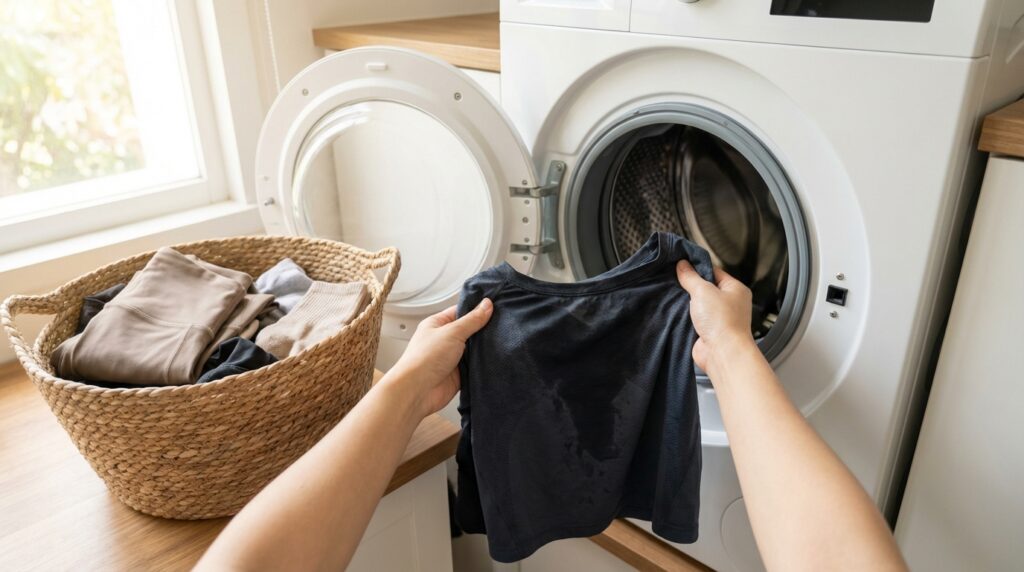
After every wear. Unlike jeans or sweaters, activewear absorbs significant sweat and bacteria each use. Rewearing without washing accelerates odor buildup.
Why do my clothes smell worse after washing?
Usually fabric softener residue, too much detergent, or a dirty washing machine. Try the vinegar pre-soak method and clean your washer drum.
Expected Results
Following this routine, most people notice improvement within 1-2 wash cycles. Deeply embedded odors in older gear may take 3-4 washes with vinegar soaks to fully neutralize. New activewear maintained this way from the start should stay fresh indefinitely with normal use.
The goal isn’t perfume-scented gym clothes—it’s neutral-smelling fabric that stays that way through your entire workout. That’s completely achievable without expensive products or complicated steps.
Start with your smelliest piece tonight: turn it inside out, soak it in cold water and vinegar for 30 minutes, then wash cold without softener. Notice the difference tomorrow.