
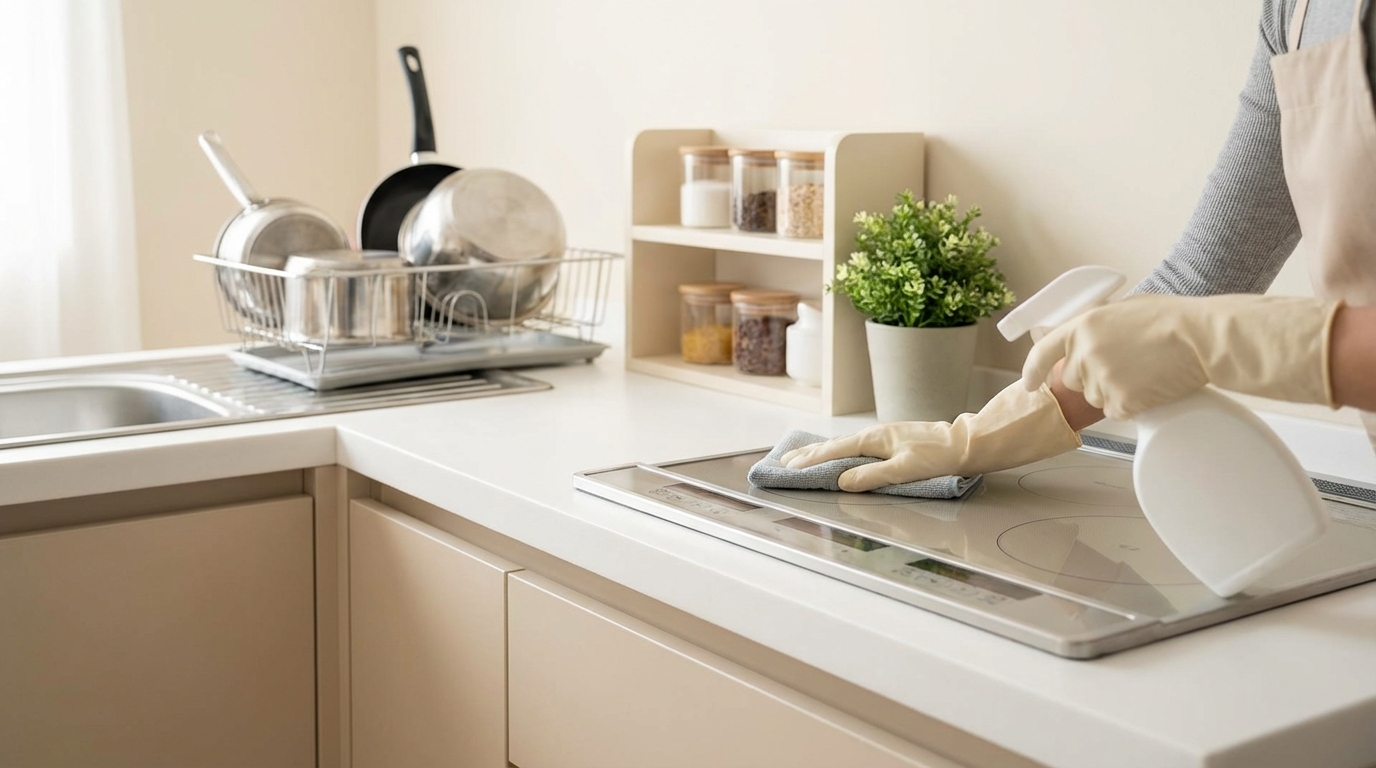
The stovetop is splattered, every pot you own is dirty, and somehow there’s flour on the ceiling. Cooking a big meal in a small kitchen feels like running a restaurant out of a closet—and the cleanup afterward can seem even more daunting than the cooking itself. But here’s the good news: with the right approach, you can clean a small kitchen after cooking a big meal in about 20minutes flat, using mostly things already under your sink.
The secret isn’t scrubbing harder. It’s working smarter—tackling messes in the right order so you’re not constantly stepping over things or re-dirtying surfaces you just wiped. This guide breaks down an efficient, eco-friendly system that respects both your time and your limited counter space.
Why Small Kitchens Need a Different Cleaning Strategy
In a spacious kitchen, you can let dishes pile up on one counter while you wipe down another. Small kitchens don’t offer that luxury. Every surface does double duty, and clutter multiplies fast. A single cutting board left out can block your entire prep area.
The other challenge? Ventilation. Compact kitchens trap cooking odors, grease particles, and steam more than larger spaces. That greasy film you feel on the cabinets above the stove? It builds up faster when there’s less airflow dispersing it.
Counter-intuitive insight: Starting with dishes actually slows you down. The most efficient order is top-to-bottom and dry-to-wet—meaning you tackle airborne grease and crumbs before touching soapy water.
What You Need for an Eco-Friendly Post-Meal Cleanup
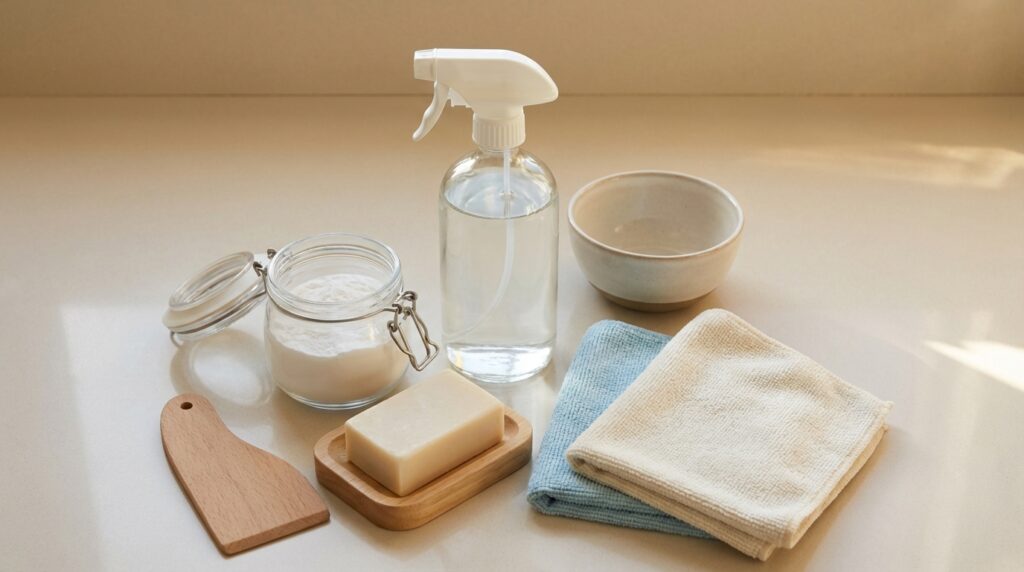
Skip the specialty cleaners. These basic supplies handle90% of post-cooking messes without harsh chemicals:
- White distilled vinegar (5% acidity)
- Baking soda
- Dish soap (preferably plant-based, like castile soap)
- Two microfiber cloths—one for wet cleaning, one for drying
- A plastic scraper or old credit card (for stuck-on food)
- Spray bottle filled with 1:1 water and vinegar solution
- Trash bowl or bag within arm’s reach
Total cost for these supplies: under $8, and they’ll last through dozens of cleanups. Compare that to a single bottle of commercial degreaser at $5-7per purchase.
How to Clean Your Small Kitchen After a Big Meal: Step-by-Step
This method works whether you’ve made Sunday roast for six or attempted homemade pasta for the first time. Expect roughly 15-25 minutes depending on the chaos level.
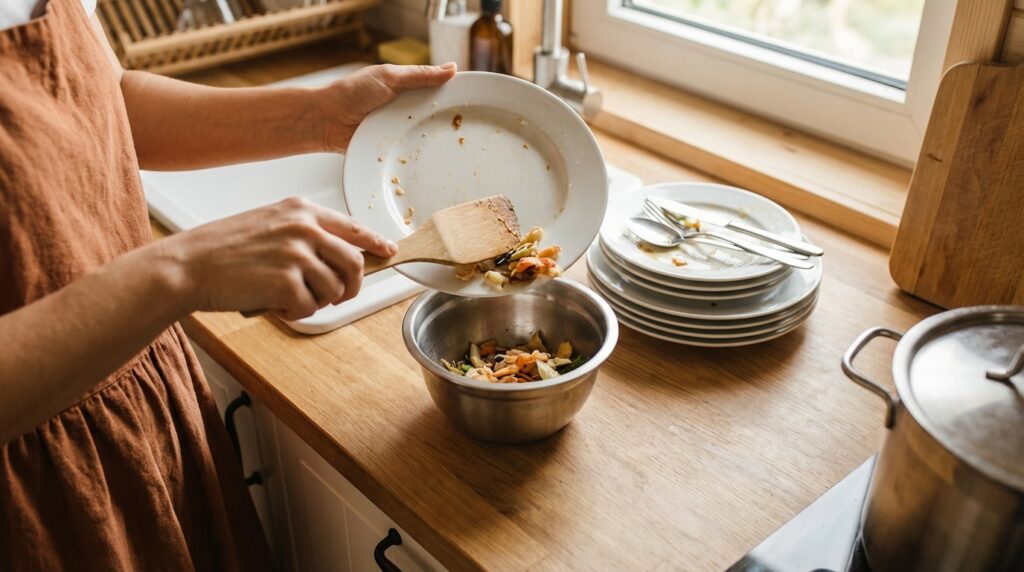
- Clear and contain. Before anything else, scrape all food scraps into your trash bowl. Stack dirty dishes near (not in) the sink. Move anything that doesn’t belong in the kitchen—phone chargers, mail, that random screwdriver—out of the space entirely. This alone makes the kitchen feel50% cleaner.
- Soak the worst offenders. Fill your most crusted pot or pan with hot water and a squirt of dish soap. Let it sit while you handle everything else. For baked-on grease, add a tablespoon of baking soda to the soak water.
- Wipe high surfaces first. Use your vinegar spray on cabinet fronts above the stove, the range hood, and any upper shelves that caught splatter. Wipe with a damp microfiber cloth. Grease and grime will drip downward—which is exactly why you haven’t cleaned the counters yet.
- Tackle the stovetop. Remove burner grates if applicable. Spray the entire surface with your vinegar solution and let it sit for 2-3 minutes. For stubborn spots, make a paste of baking soda and water, apply it, wait 5 minutes, then scrape gently with your plastic scraper. Wipe clean with a damp cloth.
- Clear and clean countertops. Working from back to front, spray and wipe all counter surfaces. Pay attention to the areas behind the faucet and around the stove knobs—these collect hidden grime. Dry with your second microfiber cloth to prevent water spots and streaks.
- Wash dishes strategically. Glasses and cups first (they need the cleanest water), then plates and bowls, then utensils, and finally pots and pans. If you have a dishwasher, load as you go and hand-wash only what doesn’t fit. That pot you left soaking? The baked-on bits should lift off easily now.
- Floor finale. Sweep or vacuum crumbs, then spot-mop any sticky areas with a damp cloth and a drop of dish soap. Full mopping is overkill for a post-meal cleanup—save that for your weekly clean.
Smart Tip: Keep a small squeegee near your sink. A quick pass over wet counters and stovetops after wiping takes10 seconds and prevents water spots and mineral buildup—especially important if you have hard water.
Expected Results
Following this method, your small kitchen should look and smell reset within 20 minutes. Counters will be clear and dry, the stovetop will be grease-free, and dishes will be done or running in the dishwasher. The vinegar smell dissipates within 15 minutes, leaving behind a neutral, clean scent rather than artificial fragrance.
Time-Saving Tricks for Cleaning Compact Kitchens
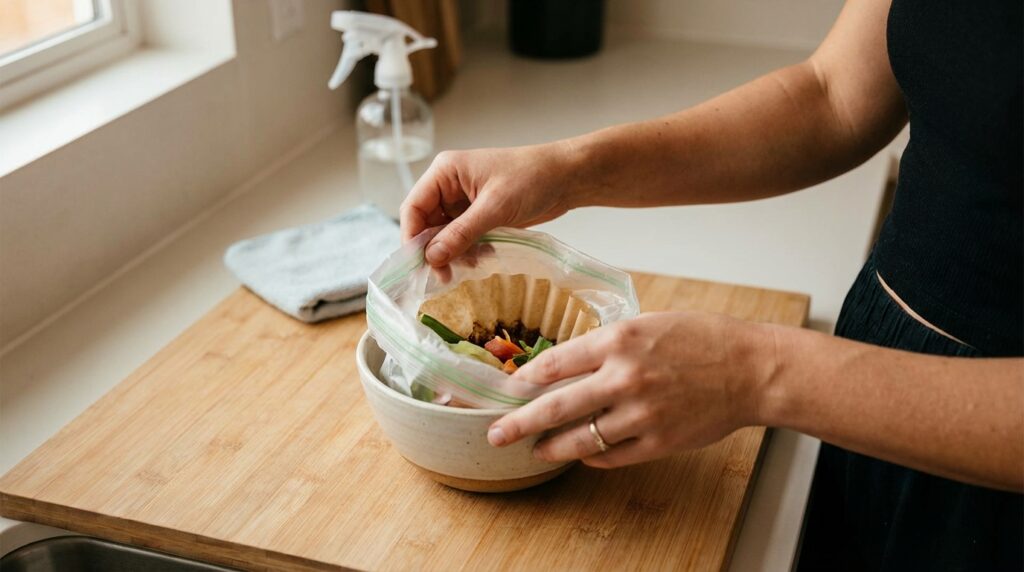
These small adjustments shave minutes off every post-meal cleanup:
- Line your trash bowl with a produce bag. When cleanup is done, tie it off and toss—no washing the bowl.
- Clean as you cook. While something simmers, wipe one surface. While theoven preheats, wash one utensil. This “micro-cleaning” prevents the overwhelming pile-up.
- Use fewer dishes intentionally. Prep vegetables on a cutting board placed over a sheet pan—one thing to wash instead of two.
- Designate a dirty dish zone. A plastic bin or even a towel-lined baking sheet corrals mess and protects your counters from greasy residue.
Cleaning a smaller kitchen after cooking means there’s literally less surface area to cover. Reframe the tight space as an advantage, not a curse. Five feet of counter wipes down much faster than fifteen.
Eco-Friendly Cleaning After Cooking: Why It Matters
Conventional kitchendegreasers often contain petroleum-based solvents, synthetic fragrances, and surfactants that wash straight into waterways. In a small, enclosed kitchen, you’re also breathing in whatever you spray—another reason to choose gentler options.
The vinegar-and-baking-soda approach isn’t just budget-friendly. It’s genuinely effective on food-based messes. Vinegar cuts through grease because of its acidity; baking soda provides gentle abrasion without scratching surfaces.
Safety note: Never mix vinegar with bleach—this creates toxic chlorine gas. And while vinegar is safe for most surfaces, avoid using it on natural stone countertops (like marble or granite) as the acid can etch the finish over time. For stone, stick to a pH-neutral cleaner or plain dish soap diluted in water.
Frequently Asked Questions
How do you get rid of cooking smells in a small kitchen fast?
Simmer a small pot of water with lemon slices and a few sprigs of rosemary for 10-15 minutes. The steam carries the fresh scent throughout the space. Opening a window—even briefly—helps more than any air freshener.
Can vinegar damage stainless steel appliances?
No, diluted vinegar is safe for stainless steel and actually helps remove fingerprints and water spots. Wipe in the direction of the grain and buff dry to avoid streaking.
What’s the fastest way to clean a greasy range hood filter?
Soak the filter in hot water with 2 tablespoons of baking soda and a squirt of dish soap for 15-30 minutes. The grease lifts off with minimal scrubbing. Do this monthly if you cook frequently.
Is it okay to pour cooking grease down the drain if I run hot water?
No—this is a plumbing disaster waiting to happen. Grease solidifies in pipes regardless of water temperature. Pour cooled grease into a jar or can and dispose of it in the trash.
Wrapping Up
A big meal in a small kitchen doesn’t have to mean an hour of cleanupdread. By working top-to-bottom, soaking strategically, and relying on simple, eco-friendly cleaners, the whole process becomes manageable—even a little satisfying. The trick is developing a consistent routine so your hands know what to do next without your brain having to micromanage every step.
Next time you finish cooking, set a timer for 20 minutes and challenge yourself to beat it. Most people find they finish faster than expected once the system becomes habit. Now go check if you have white vinegar and baking soda stocked—you’ll want them ready for your next kitchen adventure.