
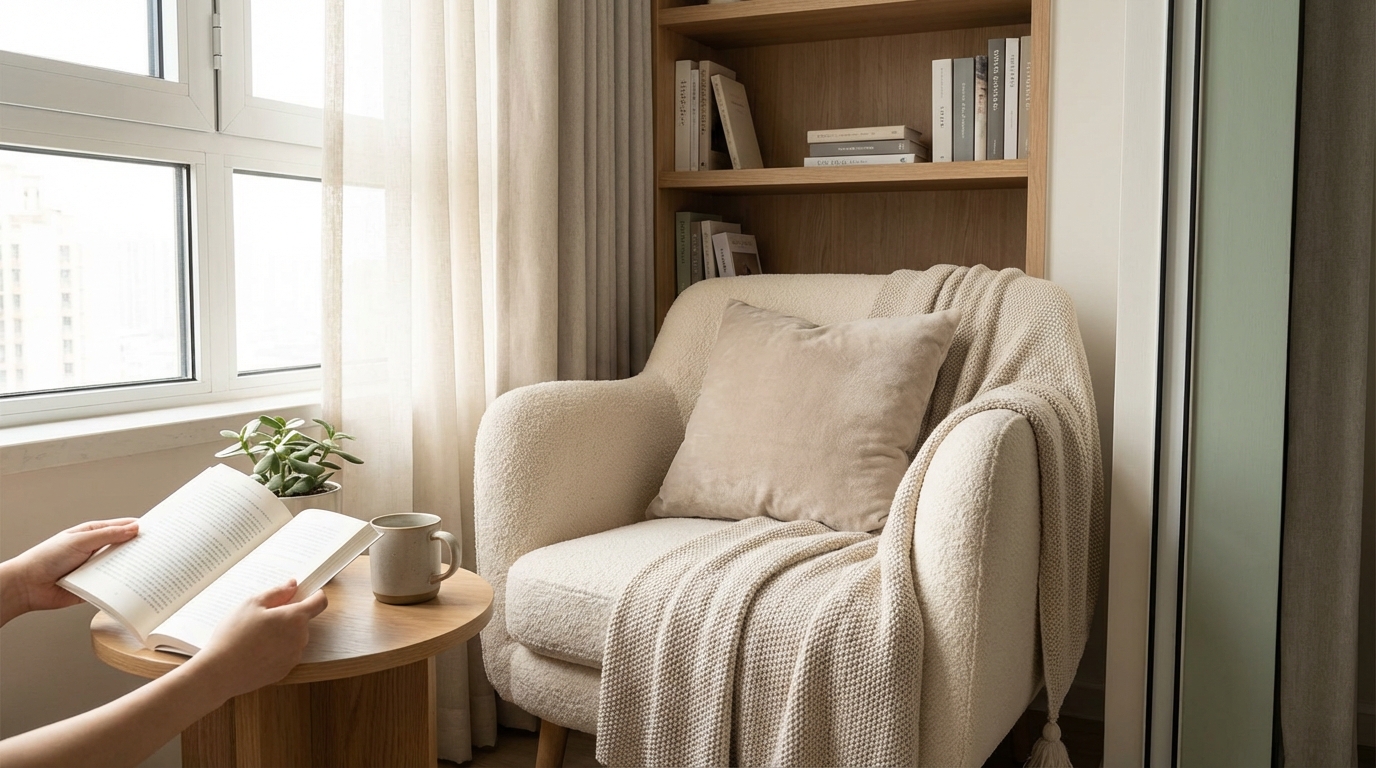
You love reading, but your room barely fits a bed and a dresser. The idea of carving out a cozy spot just for books feels like a fantasy reserved for people with sprawling homes and Pinterest-perfect lives. Here’s the thing: creating a relaxing reading nook in a tiny room is absolutely possible, and you don’t need to knock down walls or spend a fortune to make it happen.
This guide walks you through choosing the right corner, picking furniture that actually fits, and layering in comfort without cluttering your space. By the end, you’ll have a clear plan to build a reading spot that feels like a mini escape—even if your entire room is smaller than some people’s closets.
Quick Steps to Create Your Reading Nook
- Scout your room for an underused corner, window area, or awkward gap
- Choose compact seating that fits the space (floor cushion, small chair, or window seat)
- Add a small surface for books, tea, or your phone
- Layer in soft textiles: a throw blanket, a cushion or two
- Set up task lighting so you’re not straining your eyes
- Personalize with a few meaningful touches (but resist the urge to over-decorate)
What You’ll Need
Before you start rearranging furniture, gather a few essentials. The good news: most of these items are budget-friendly or things you might already own.
- Seating: a floor cushion, pouf, compact armchair, or even a folded blanket
- A small side table, stool, or wall-mounted shelf
- A reading lamp (clip-on, floor lamp, or wall sconce)
- Soft textiles: throw blanket, pillow, or sheepskin rug
- Optional: a small basket or caddy for books and reading glasses
- Optional: curtain or canopy fabric if you want a sense of enclosure
You don’t need to buy everything at once. Start with seating and lighting, then add layers over time as you figure out what makes the space feel right for you.
Step-by-Step: Building Your Tiny Reading Nook
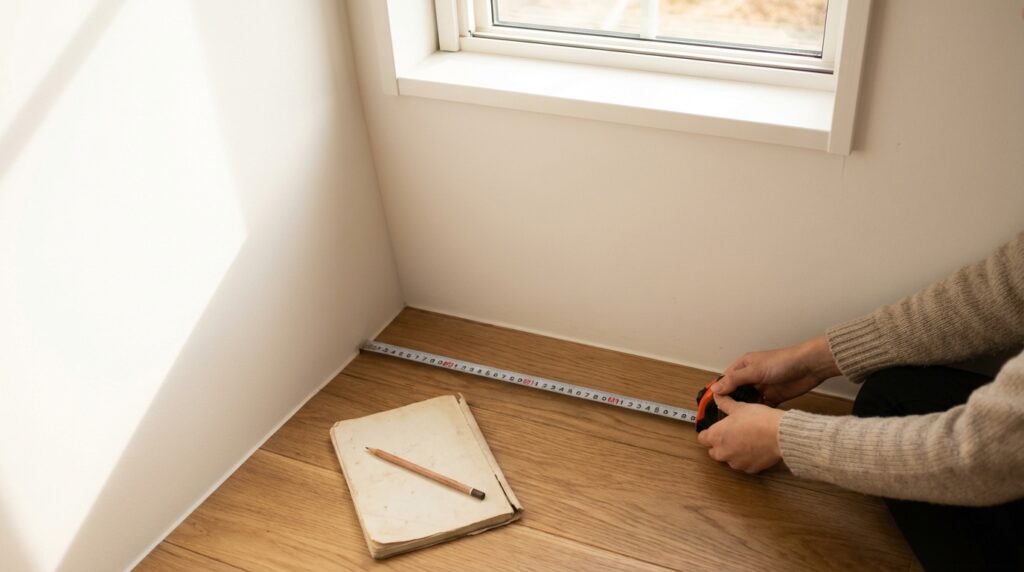
Step 1: Find your spot. Walk around your room and look for dead zones—corners that collect dust, the space under a window, the gap between your bed and the wall, or even the foot of your bed. In tiny rooms, vertical space and awkward angles are your friends. A spot near natural light is ideal for daytime reading, but any quiet corner works if you add good lighting.
Step 2: Measure before you shop. This sounds obvious, but it’s the mistake that derails most small-space projects. Grab a tape measure and note the width, depth, and height of your chosen area. Write it down or save it in your phone. When you’re browsing for chairs or shelves, you’ll thank yourself for having those numbers handy.
Step 3: Choose seating that fits your lifestyle. If you’re working with a very tight corner, a large floor cushion or a stack of poufs might be more practical than a chair. For window nooks, a bench with storage underneath pulls double duty. If you have a bit more room, a compact armchair or a papasan-style seat can work beautifully. The key is to pick something you’ll actually sit in—not something that looks cute but feels uncomfortable after ten minutes.
Step 4: Add a surface for your stuff. You’ll want somewhere to set your book, a cup of tea, or your phone. A tiny side table, a wooden stool, or a wall-mounted floating shelf all work well. If floor space is tight, go vertical: a small shelf at elbow height keeps essentials within reach without eating into your footprint.
Step 5: Layer in softness. This is where the “relaxing” part really comes together. Drape a throw blanket over your seat, toss in a cushion or two, and consider a small rug underfoot if you’re on hard flooring. Soft textures signal to your brain that this is a cozy zone, not just another corner of your room.
Step 6: Set up proper lighting. Reading in dim light is a fast track to headaches and eye strain. A clip-on book light, a small floor lamp, or a wall-mounted sconce with an adjustable arm all work well. Warm-toned bulbs tend to feel cozier than harsh white light. If your nook is near a window, you get bonus points for natural daylight during the day.
Step 7: Personalize (but don’t overdo it). A small plant, a framed photo, or a candle can make the space feel like yours. But in a tiny room, clutter creeps in fast. Stick to two or three meaningful items and resist the urge to fill every inch. The goal is a calm retreat, not a crowded shelf.
Shortcut If You’re Short on Time
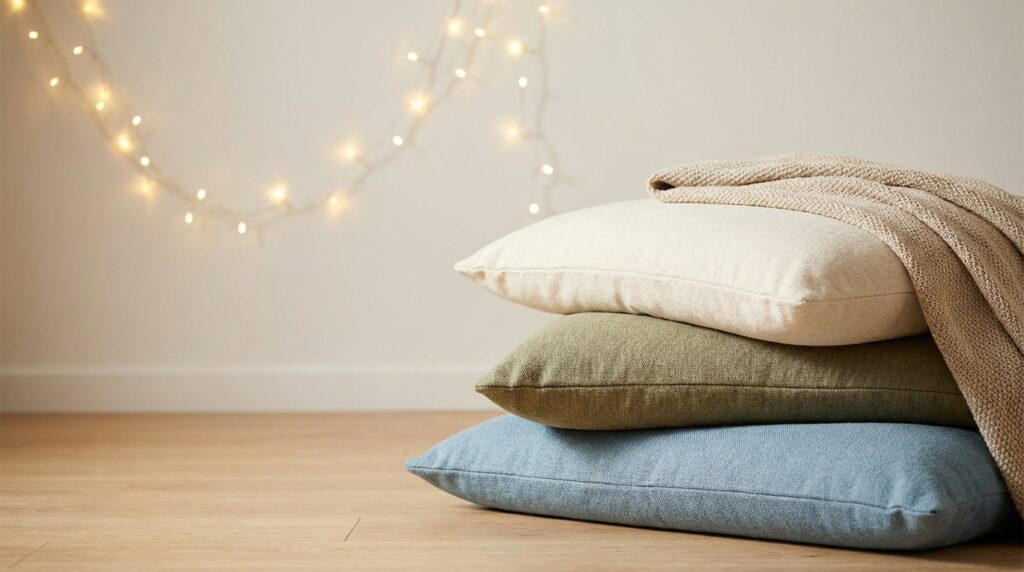
- Skip the furniture hunt—pile two or three large floor cushions in a corner and call it done
- Use a clip-on book light instead of installing a lamp
- Repurpose a blanket you already own as both seating pad and throw
- A sturdy cardboard box or crate works as a temporary side table
- Hang a string of fairy lights for instant ambiance without any installation
Common Mistakes (and How to Avoid Them)
Even with the best intentions, a few missteps can turn your reading nook into a frustrating project. Here’s what trips people up most often.
- Buying furniture before measuring. That adorable chair looked perfect online, but now it blocks your closet door. Always measure first.
- Ignoring lighting. A cozy corner is useless if you can’t actually see your book. Prioritize a good reading light from the start.
- Overloading with decor. In small spaces, less really is more. Too many pillows, plants, and knick-knacks make the nook feel cramped instead of calm.
- Choosing style over comfort. A beautiful chair that’s uncomfortable to sit in won’t get used. Test seating when possible, or read reviews about comfort before buying.
- Forgetting about storage. If you don’t have a spot for your current read and reading glasses, they’ll end up scattered around the room. A small basket or shelf solves this.
Ideas for Specific Tiny Room Challenges
If You Share a Room
Creating a reading nook in a shared bedroom or studio can feel tricky. A small curtain or hanging fabric panel can visually separate your nook from the rest of the space, giving you a sense of privacy without building actual walls. Noise-canceling headphones or soft background music can help you tune out distractions.
If You Have Zero Floor Space
Look up. A window seat, a lofted bed with space underneath, or even a wide windowsill with a cushion can become your reading spot. Wall-mounted shelves and clip-on lights keep everything off the floor.
If You’re Renting and Can’t Make Changes
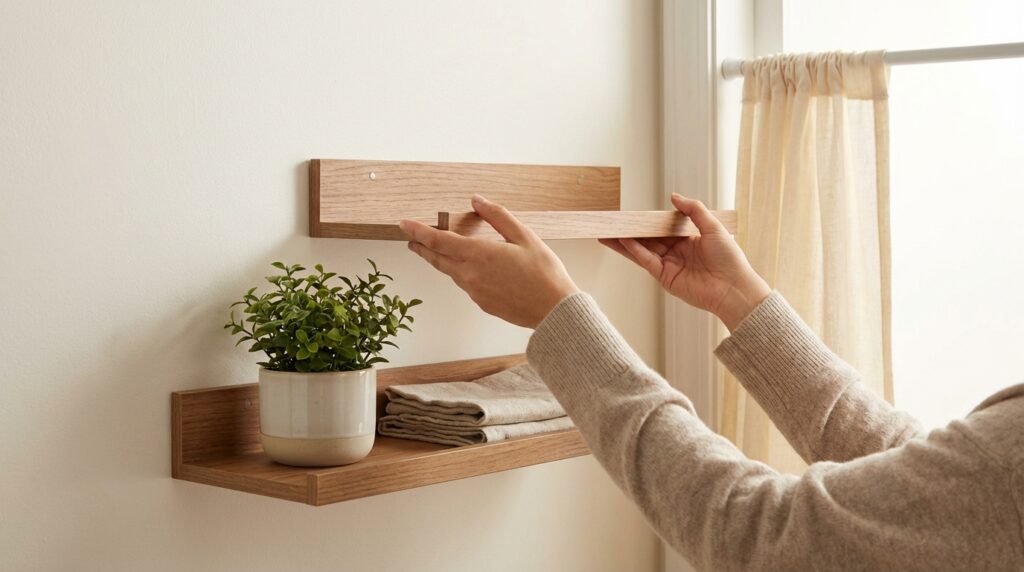
Stick to freestanding furniture and removable solutions. Command hooks, tension rods for hanging fabric, and peel-and-stick wall shelves let you customize without risking your security deposit.
Frequently Asked Questions
How much space do I actually need for a reading nook?
You can create a functional nook in as little as a two-foot by two-foot corner. A floor cushion, a small lamp, and a basket for books is all it takes. The space doesn’t need to be large—it just needs to feel intentional and comfortable.
What’s the best seating for a tiny reading nook?
Floor cushions, poufs, and compact armless chairs tend to work best in small spaces. If you’re near a window, a narrow bench with storage is a smart choice. The “best” option depends on your body, your space, and how long you typically read in one sitting.
How do I make my reading nook feel cozy without clutter?
Focus on soft textures rather than lots of objects. One good throw blanket and a comfortable cushion do more for coziness than a dozen decorative items. Keep surfaces clear and store books in a basket or on a single small shelf.
Can I create a reading nook without buying new furniture?
Absolutely. Repurpose what you have: stack pillows from your bed, use a folded blanket as a seat pad, and set a mug or small box beside you as a makeshift table. The nook is about the intention and the habit, not the price tag.
Summary and Next Step
Building a relaxing reading nook in a tiny room comes down to working with what you have, not fighting against it. Find an underused corner, add comfortable seating and good lighting, layer in soft textures, and keep decor minimal. The result is a dedicated spot that invites you to slow down and read—even when the rest of your space feels cramped.
Your next step is simple: walk around your room today and pick your spot. Measure it, snap a photo, and start imagining what could fit there. You don’t need to buy anything yet. Just claiming that corner as your future reading nook is the first real step toward making it happen.