
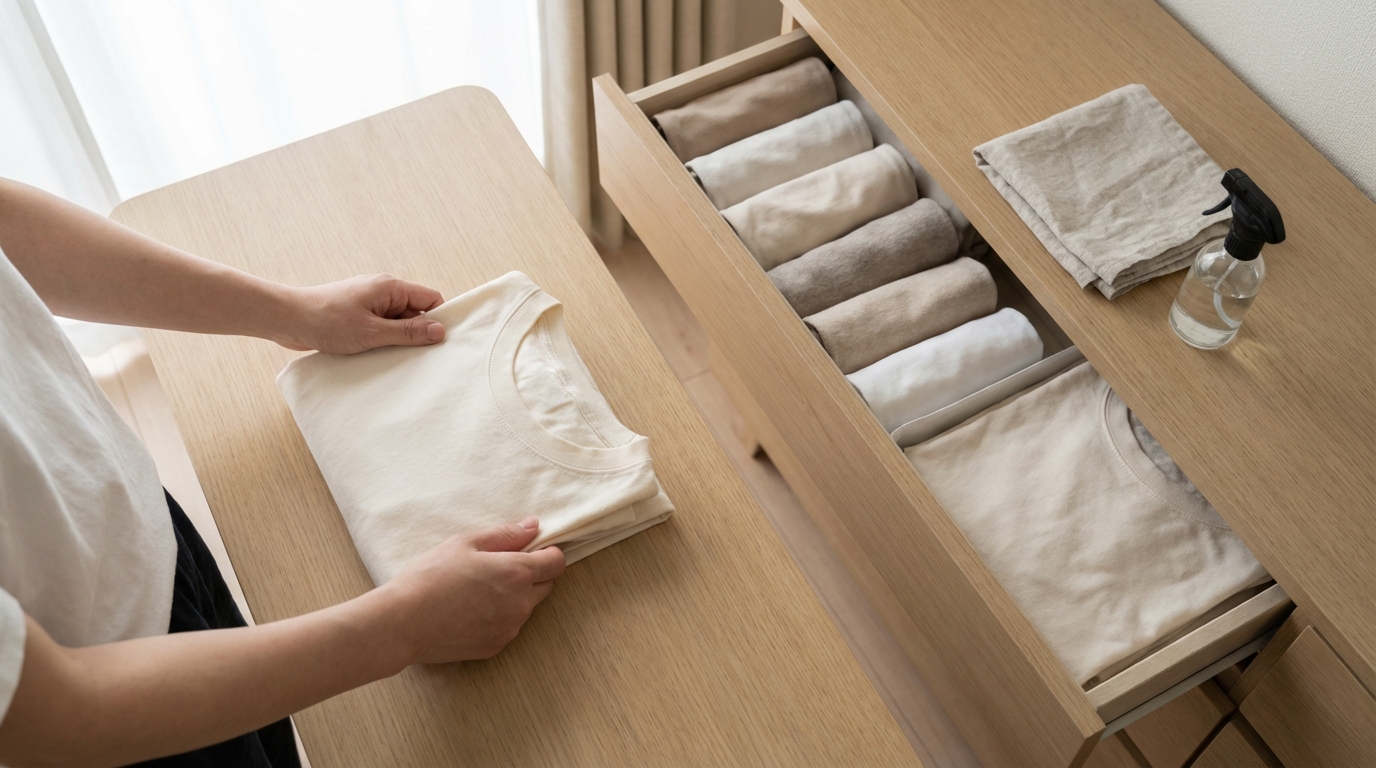
You open your drawer, and it looks like a fabric explosion happened overnight. Shirts are crumpled, socks have migrated to mysterious corners, and finding that one pair of leggings feels like an archaeological dig. Learning how to fold clothes to save space in drawers isn’t just about tidiness—it’s about reclaiming your mornings and actually seeing what you own.
This guide walks you through practical folding methods that maximize every inch of drawer space, keep clothes visible at a glance, and cut down on wrinkles. No fancy organizers required, though we’ll cover a few that genuinely help if you want them.
Quick Routine for Folding Clothes to Save Drawer Space
- Fold items into compact rectangles that stand upright (file folding)
- Group similar items together in rows
- Store clothes vertically so you see everything at once
- Leave a small gap at the top so items don’t get jammed
- Refold bulky items like sweaters into thirds to reduce height
What You’ll Need
- A flat surface (bed, table, or clean floor)
- Empty drawers or cleared drawer sections
- Optional: drawer dividers, small boxes, or cardboard strips
- About 20–30 minutes for your first session
You don’t need to buy anything special. Most people already have what they need—just a bit of patience and a willingness to try a new approach.
The File Folding Method (Your New Best Friend)
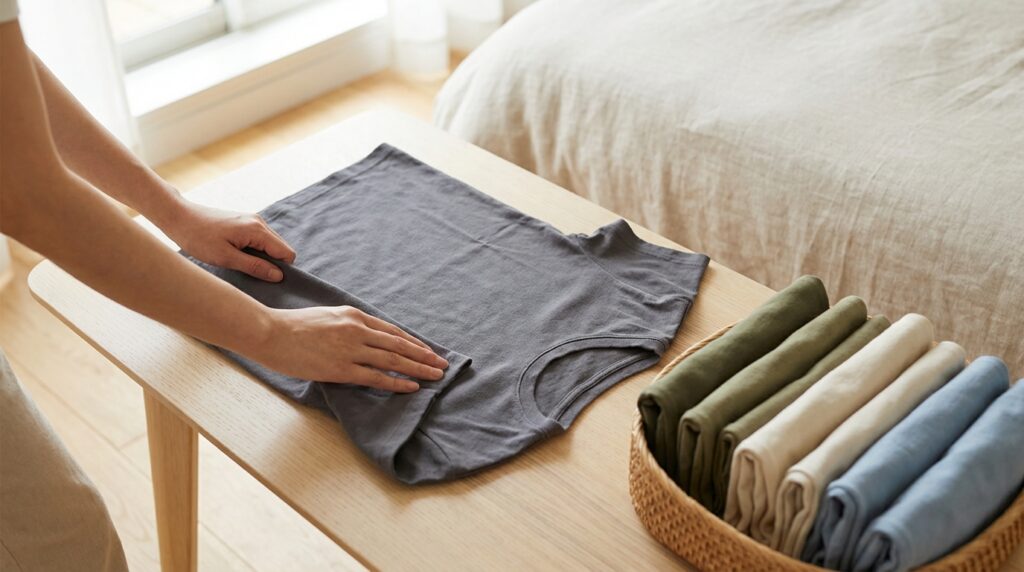
File folding is exactly what it sounds like: folding clothes so they stand upright like files in a cabinet. Instead of stacking shirts on top of each other (where the bottom ones become invisible and wrinkled), you arrange them in rows. One glance and you see every item.
Step 1: Lay the garment flat, front side down. Smooth out any major wrinkles with your hands.
Step 2: Fold one side toward the center, bringing the sleeve (if there is one) along with it. Repeat on the other side. You should now have a long rectangle.
Step 3: Fold the bottom hem up toward the neckline. Depending on the item’s length and your drawer depth, fold it in half or in thirds. The goal is a compact rectangle that can stand on its own.
Step 4: Place the folded item in your drawer with the folded edge facing up. Line items side by side, not stacked.
A common mistake is folding too loosely. If the rectangle flops over, it’s not tight enough. Give it a firm press as you fold each layer.
Shortcut If You’re Short on Time
- Focus on everyday items first—t-shirts, underwear, and loungewear benefit most
- Skip file folding for bulky sweaters; a simple flat fold works better
- Roll workout clothes instead of folding—faster and still space-efficient
- Batch your folding: do it all at once after laundry rather than piece by piece
- Use the “good enough” rule—perfection isn’t the goal, visibility is
Folding Different Types of Clothing
Not every garment folds the same way. Here’s how to handle the most common drawer residents.
T-Shirts and Casual Tops
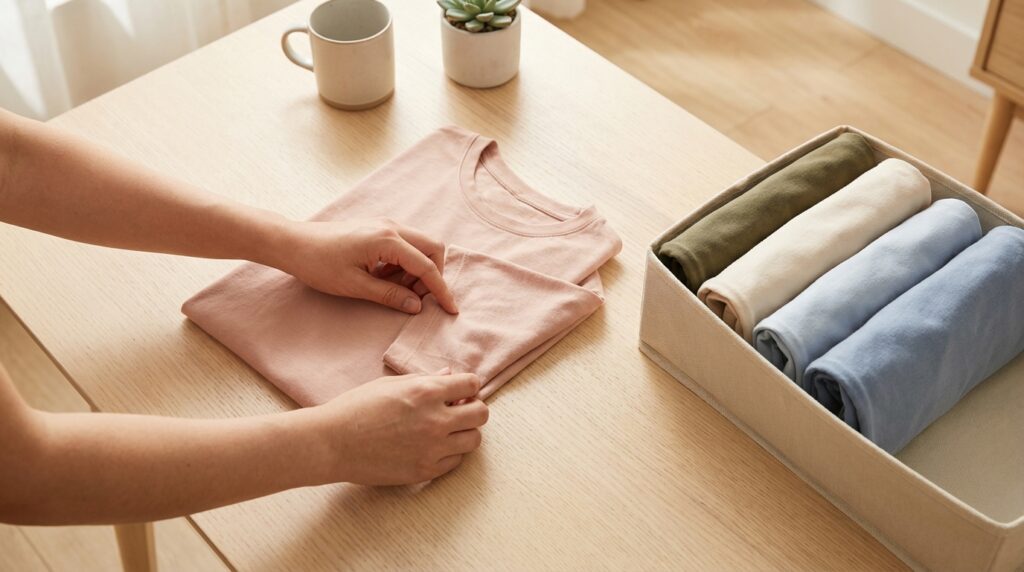
These are file folding superstars. Fold sleeves in, then fold the body into thirds. If you’re running late and just need something clean, you’ll spot it instantly. Most people notice their t-shirt collection suddenly feels bigger once everything is visible—turns out you weren’t actually wearing the same five shirts on rotation.
Jeans and Pants
Fold jeans in half lengthwise (one leg on top of the other), then fold into thirds or quarters depending on drawer depth. Denim is heavy, so these folds hold their shape well. If your drawer is shallow, try rolling jeans instead—they compress surprisingly well.
Underwear and Socks
For underwear, fold the crotch up toward the waistband, then fold in thirds. Stand them upright in a row. Socks can be folded in half and stood up, or rolled into small bundles. Avoid the “ball” method where you stretch one sock over the other—it wears out the elastic faster.
If you live in a small apartment with limited storage, keeping underwear and socks tightly organized frees up surprising amounts of space for other items.
Sweaters and Knitwear
Heavy knits don’t file fold well—they’re too bulky to stand upright. Instead, fold them flat into neat rectangles and stack two or three per pile. The key is keeping stacks short so you’re not digging through layers. If you have deep drawers, consider dedicating one just to sweaters during colder months.
Activewear and Leggings
Leggings and stretchy workout gear respond beautifully to rolling. Fold in half lengthwise, then roll from waistband to ankle. The rolls tuck neatly into rows and don’t unfold themselves the way looser fabrics might.
Common Mistakes (and How to Fix Them)
- Overstuffing drawers: If you have to shove items in, you have too much. Remove a few pieces or relocate seasonal items elsewhere.
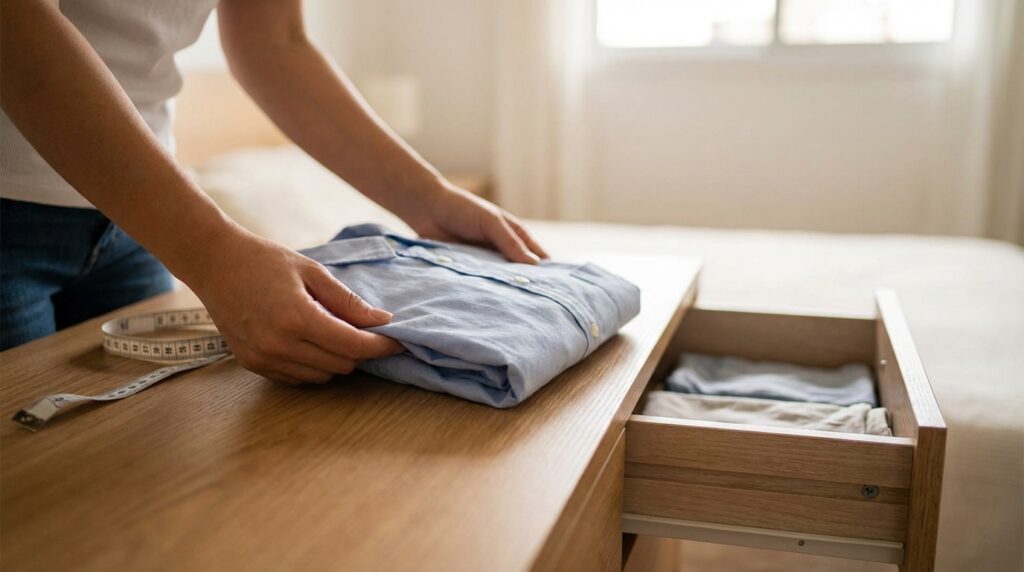
- Folding too large: Measure your drawer depth before folding. Adjust your folds so items fit without bending at the top.
- Mixing categories: Keeping socks with shirts creates chaos. Dedicate sections or use simple dividers.
- Ignoring the “one in, one out” rule: New clothes need space. If you add something, consider donating something else.
- Giving up after one messy week: Drawers get disrupted. A quick five-minute reset each week keeps the system working.
In practice, the biggest issue isn’t the folding technique—it’s having too many clothes for the available space. If your drawers are constantly overflowing no matter how you fold, that’s a sign to edit your wardrobe, not buy more organizers.
Simple Tools That Actually Help
You don’t need to spend money to fold clothes well, but a few inexpensive tools can make the system easier to maintain.
Drawer dividers: Adjustable dividers (often sold in sets) create dedicated lanes for different categories. They prevent items from slowly migrating into each other’s territory.
Small boxes or bins: Repurpose shoe boxes or small containers for socks, underwear, or accessories. They act as built-in compartments without any installation.
Folding boards: If you struggle with consistent folds, a simple folding board (or even a piece of cardboard cut to size) helps you get uniform rectangles every time. Some people find this speeds up the process once they get the hang of it.
If you hate strong scents, skip scented drawer liners—they can transfer odors to clothes. A plain liner or nothing at all works fine.
Frequently Asked Questions
Does file folding really save that much space?
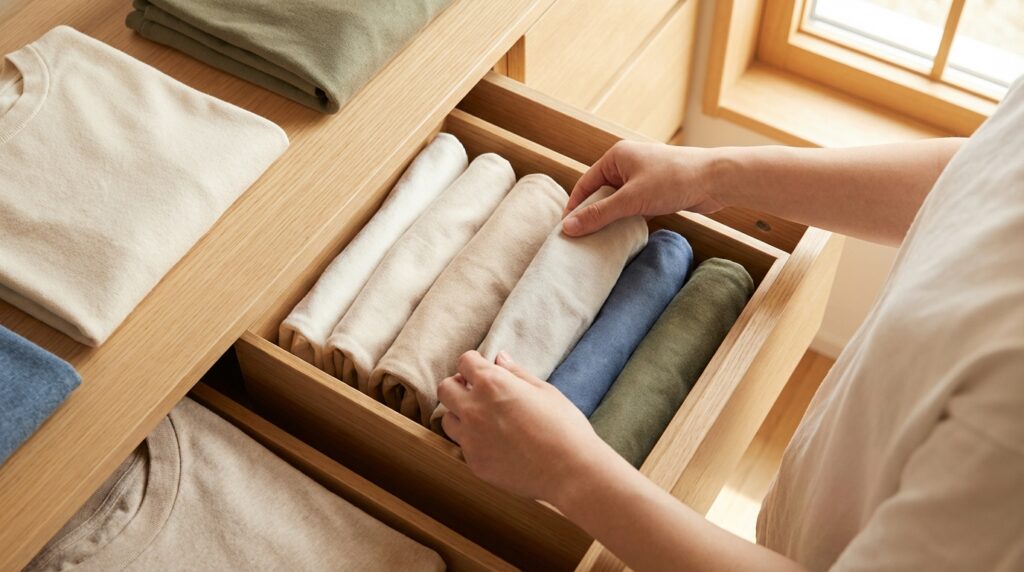
It does, but the bigger benefit is visibility. You stop buying duplicates of things you forgot you owned, and you actually wear more of your wardrobe. The space savings come from eliminating wasted gaps between stacked piles.
How do I keep drawers organized long-term?
Build a small habit: when you put away laundry, take an extra minute to file fold properly. Once a week, do a quick drawer scan and straighten anything that’s shifted. It takes less time than searching for lost items.
What if my drawers are too shallow for file folding?
Adjust your folds to be shorter and wider. You can also try rolling instead of folding—rolls work well in shallow spaces and still let you see everything.
Should I fold everything or hang some items?
Hang anything that wrinkles easily or has structure you want to preserve (blazers, dress shirts, delicate blouses). Fold casual items, knits, and anything stretchy that might lose shape on a hanger.
Summary and Next Step
Folding clothes to save space in drawers comes down to a few core ideas: fold items into compact shapes, store them vertically so everything is visible, and resist the urge to overstuff. File folding works for most everyday items, while bulkier pieces do better with flat stacks or rolls.
Start with one drawer—your t-shirt drawer is a good candidate. Empty it, refold everything using the file method, and see how it feels for a week. Once that drawer stays organized, move on to the next. Small wins build momentum, and before long, opening your drawers might actually feel satisfying instead of stressful.