
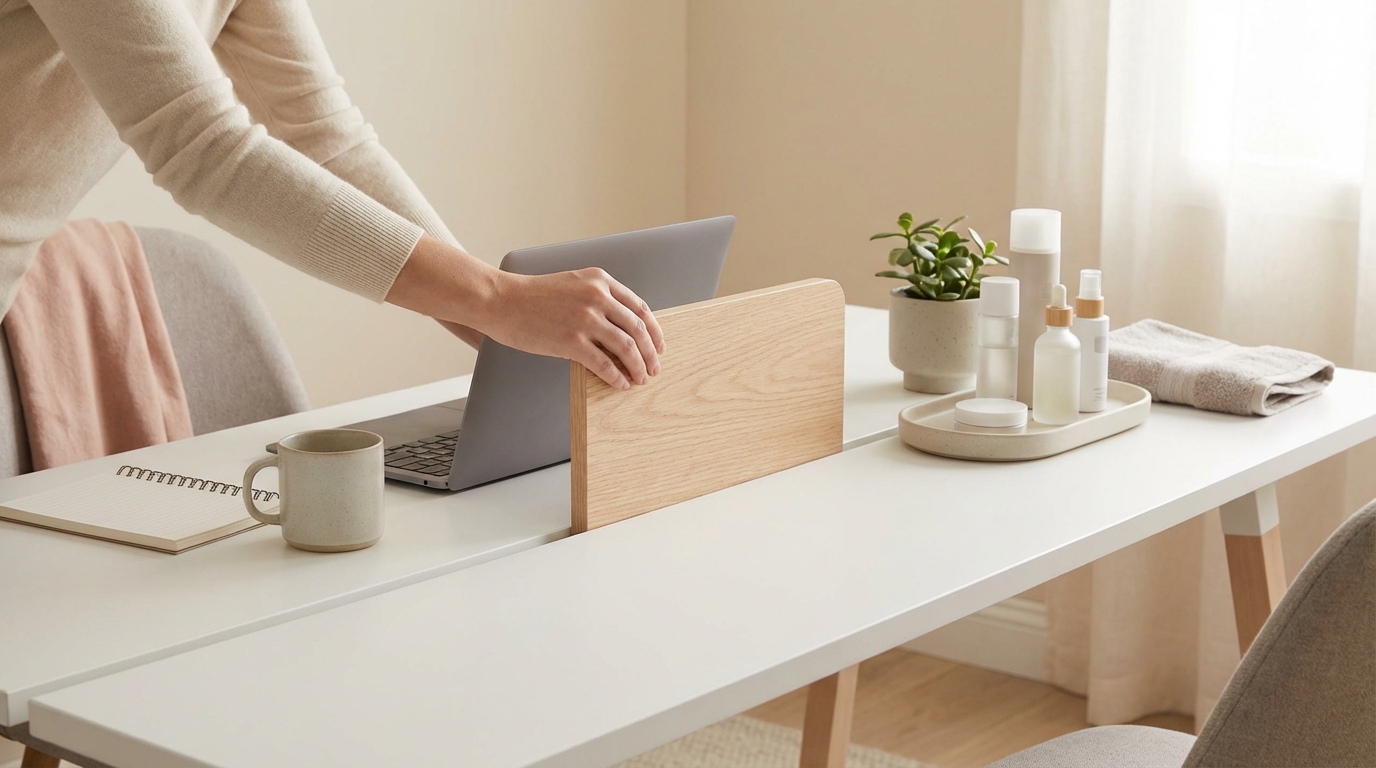
The laptop sits on the same table where dinner happens. The couch doubles as a conference call backdrop. And somehow, “logging off” never quite feels real because the office is also the living room. Sound familiar? Learning how to separate work and relaxation areas in one room doesn’t require a renovation budget or extra square footage—just a few intentional tweaks that signal to your brain when it’s time to work and when it’s time to unwind.
The good news: most of these solutions cost under $50, take less than an hour to set up, and use items you might already own.
Why Your Brain Needs Physical Boundaries
Working and relaxing in the same spot creates what psychologists call “context confusion.” Your brain associates spaces with activities. When those lines blur, it becomes harder to focus during work hours and harder to decompress afterward.
Even a small visual or physical cue—a different chair, a folding screen, a shifted lamp—can help your brain switch gears. Think of it as creating “micro-zones” rather than separate rooms.
Counter-Intuitive Insight: A completely open, minimalist space can actually make separation harder. A few strategic visual barriers often work better than a pristine, furniture-free room.
What You Need to Create Distinct Zones
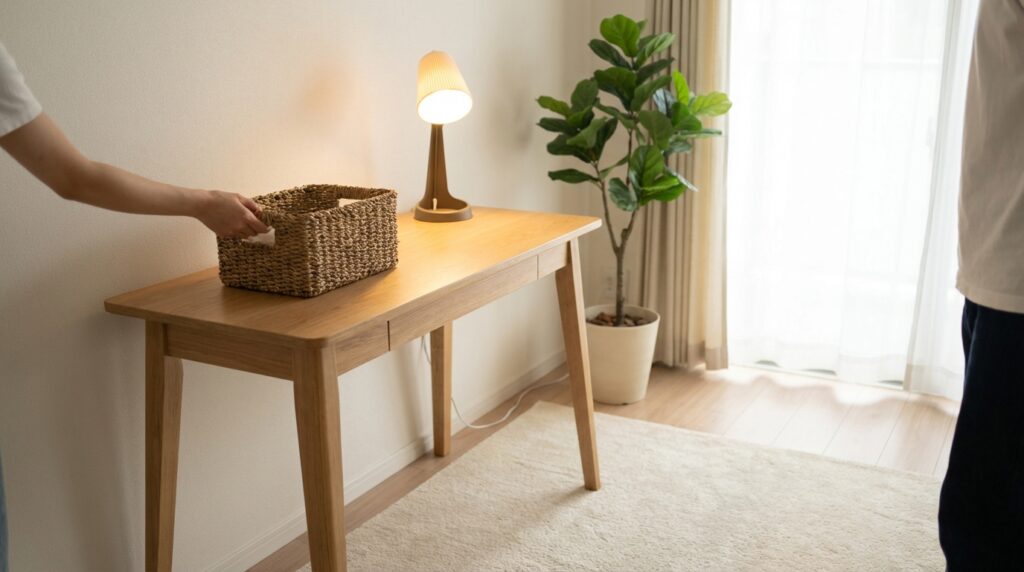
No need to buy everything at once. Start with one or two items and build from there.
- A room divider, bookshelf, or tall plant (acts as a visual barrier)
- A dedicated desk lamp or task light (signals “work mode”)
- A small rug or floor mat (defines the work footprint)
- Storage bins or a rolling cart (keeps work supplies contained)
- Noise-canceling headphones or a white noise machine (optional but helpful)
- A curtain rod with a simple curtain panel (budget-friendly partition)
Total estimated cost if starting from scratch: $40–$120 depending on choices. Many people already have a bookshelf or rug that can be repositioned.
How to Divide Work and Rest Spaces Step by Step
- Map your room’s natural light. Position the work zone near a window if possible—natural light reduces eye strain and boosts alertness. Keep the relaxation area slightly dimmer or oriented away from direct sunlight for a cozier feel.
- Choose a physical divider. A bookshelf works double duty as storage and a barrier. A folding screen (around $30–$60) can be tucked away on weekends. Even a tall plant like a fiddle leaf fig or snake plant creates a soft boundary without blocking light entirely.
- Define the work zone with a rug or mat. A 3×5 foot rug under the desk chair creates a visual “office footprint.” When you step off the rug, you’ve symbolically left work. This sounds small, but the psychological effect is surprisingly strong.
- Use lighting to reinforce zones. A bright desk lamp stays on during work hours, then gets switched off at the end of the day. In the relaxation area, use warmer, softer lighting—string lights, a floor lamp with a dimmer, or candles.
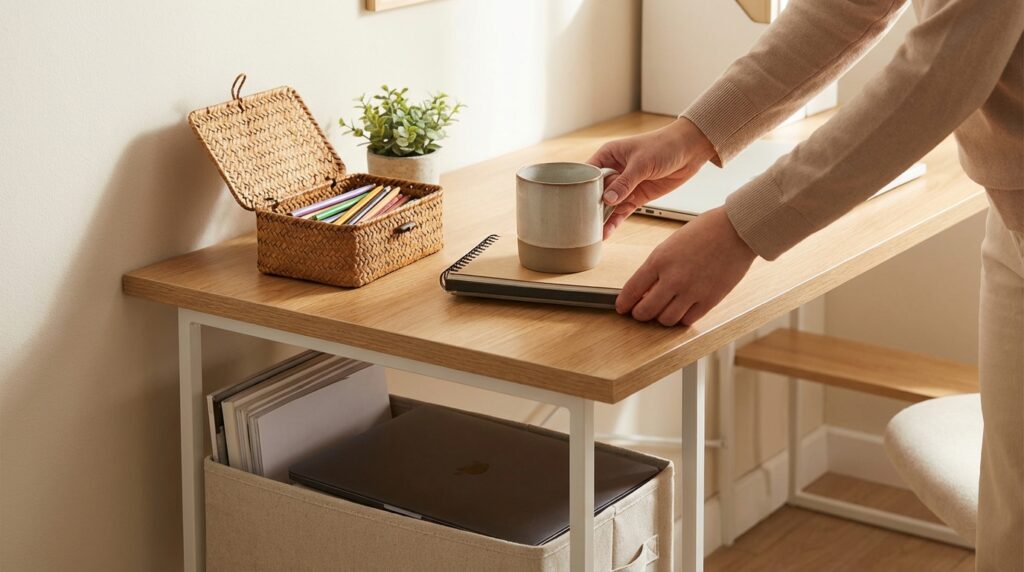
- Contain work supplies in one spot. A rolling cart or closed storage bin keeps cables, notebooks, and office clutter from creeping into the rest of the room. At the end of the workday, close the bin or roll the cart out of sight. Out of sight genuinely helps with out of mind.
- Create a “shutdown ritual.” This isn’t about furniture, but it reinforces the physical separation. Close the laptop, turn off the desk lamp, and physically move to the relaxation zone. Even a 30-second routine helps your brain register the transition.
Smart Tip: If budget is tight, a tension rod with a curtain panel ($15–$25 total) creates an instant partition that can be drawn closed after work hours. It’s renter-friendly and takes about 10 minutes to install.
Expected Results
Within a week or two of consistent use, most people notice it’s easier to focus during work hours and easier to mentally “clock out” afterward. The room won’t feel like a permanent office anymore—it’ll feel like a room that happens to have a work corner. Stress levels around the workspace tend to drop once the boundaries become habit.
Layout Ideas for Common Room Shapes
Not every room cooperates. Here are quick fixes for tricky layouts:
Long, narrow room: Place the desk at one end, relaxation seating at the other. Use a bookshelf or curtain at the midpoint to create two distinct halves.
Small square room: Corner desks work well here. Angle the desk into a corner and use a tall plant or floor lamp as a soft divider. The rest of the room stays open for relaxation.
Studio apartment: The bed often doubles as a couch, which complicates things. Position the desk so it faces away from the bed. A folding screen between the desk and sleeping area helps. If space is extremely tight, a wall-mounted fold-down desk ($50–$100) can be closed at the end of the day, physically “disappearing” the workspace.
Mistakes That Make Separation Harder

A few common missteps sabotage even well-intentioned setups:
- Working from the couch or bed. It feels cozy at first, but it trains your brain to associate rest spaces with work stress. Even a tiny dedicated desk spot is better.
- Leaving work materials visible 24/7. That open laptop on the dining table is a constant reminder. Closing it or covering it with a cloth makes a difference.
- Ignoring sound boundaries. Visual separation helps, but if work calls echo through the whole room, relaxation suffers. Headphones during work hours or a small white noise machine in the relaxation zone can help.
- Over-complicating the setup. Elaborate systems rarely stick. One divider, one dedicated light, and a shutdown ritual are enough for most people.
Frequently Asked Questions
What if I don’t have room for a divider?
Use visual cues instead. A different colored rug under the desk, a specific lamp that only turns on during work, or even a “work mode” playlist can signal the shift without taking up floor space.
Can I use the same desk for work and hobbies?
Yes, but clear it completely between uses. A desk covered in work papers won’t feel like a craft space. Keep hobby supplies in a separate bin and swap them out intentionally.
How do I handle a shared room with a partner?
Coordinate schedules if possible so one person works while the other relaxes elsewhere. Noise-canceling headphones become essential. If both need to work simultaneously, back-to-back desk positioning reduces visual distraction.
Does this actually help with burnout?
Physical boundaries alone won’t cure burnout, but they reduce one contributing factor: the feeling that work never ends. Combined with set work hours and a shutdown ritual, spatial separation supports better mental boundaries.
Pulling It Together
Separating work and relaxation in a single room comes down to three things: a visual or physical barrier (even a small one), dedicated lighting for each zone, and a consistent routine that marks the transition. None of this requires major spending or construction—just intentional placement of what you already have or a few affordable additions.
Start with the easiest change: reposition a bookshelf, add a rug under the desk, or commit to closing the laptop and switching off the desk lamp at a set time each day. Small shifts add up. Within a couple of weeks, that one room can genuinely feel like two.