
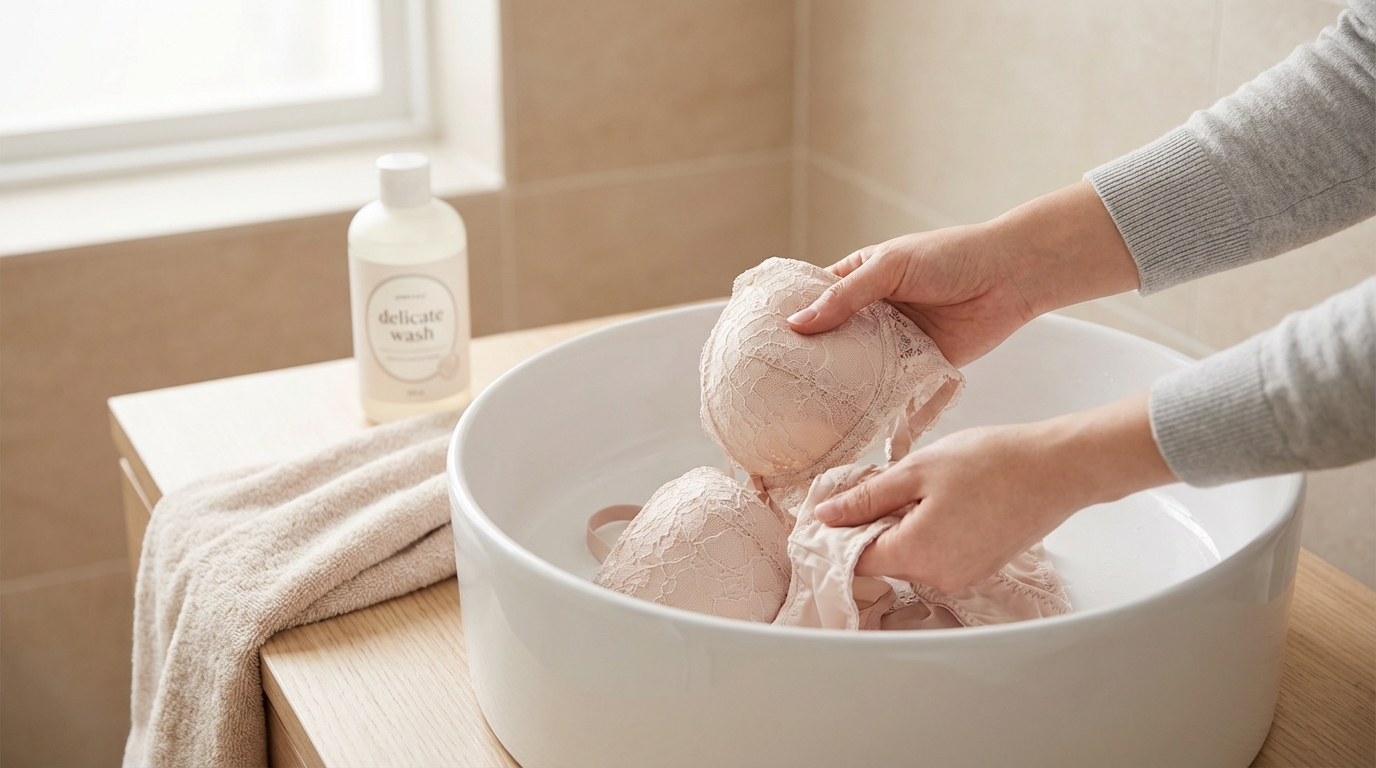
You finally find a bra that fits perfectly, feels comfortable, and actually looks nice under your clothes. Three months later, the elastic is shot, the cups are warped, and the whole thing looks like it survived a wrestling match with your washing machine. Sound familiar? Learning how to wash bras and underwear properly can genuinely double or triple their lifespan, which means fewer shopping trips and more money staying in your pocket.
This guide covers the simple washing methods that protect delicate fabrics, the common mistakes that destroy intimates faster than anything else, and a few shortcuts for when life gets busy. Whether you prefer hand washing or need to use a machine, you’ll walk away with a routine that actually works.
Quick Routine at a Glance
- Hand wash bras in cool water with gentle detergent, or use a mesh bag on the delicate cycle
- Never put bras in the dryer—reshape and air dry flat or hanging
- Wash underwear after every wear, bras after 2–4 wears
- Fasten hooks before washing to prevent snagging
- Skip fabric softener on anything with elastic or moisture-wicking fabric
What You’ll Need
- A clean basin, sink, or small tub
- Gentle liquid detergent (lingerie wash or baby detergent works well)
- Mesh laundry bags in different sizes
- A clean, dry towel
- A drying rack or padded hanger
You don’t need fancy products. A basic mesh bag costs a few dollars and will protect your intimates for years. If you don’t have lingerie-specific detergent, any mild liquid soap without harsh additives does the job.
How to Wash Bras Step by Step
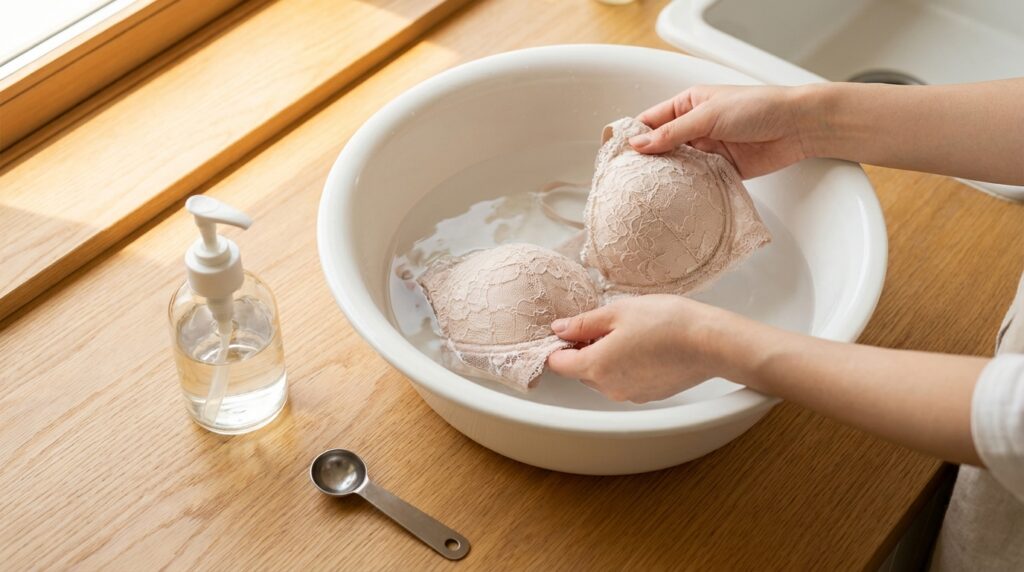
Step 1: Fill a basin with cool or lukewarm water. Hot water breaks down elastic fibers and can warp molded cups, so keep the temperature comfortable to the touch but not warm.
Step 2: Add a small amount of gentle detergent—about a teaspoon is enough for one or two bras. Swirl it around until it dissolves. Too much soap leaves residue that can irritate skin and stiffen fabric over time.
Step 3: Submerge your bras and let them soak for 10 to 15 minutes. This loosens body oils, deodorant buildup, and sweat without aggressive scrubbing. If you notice stubborn spots, gently rub the fabric against itself in that area.
Step 4: Drain the soapy water and rinse each bra under cool running water. Keep rinsing until the water runs clear and there’s no slippery residue left. Leftover detergent can irritate skin and attract dirt faster.
Step 5: Press—don’t wring—the water out. Lay the bra flat on a clean towel, fold the towel over, and press gently to absorb excess moisture. Twisting or wringing stretches the band and distorts cup shapes.
Step 6: Reshape the cups with your hands and lay the bra flat to dry, or hang it by the center gore (the part between the cups). Never hang a wet bra by its straps, as the weight of the water stretches them out.
Shortcut If You’re Short on Time
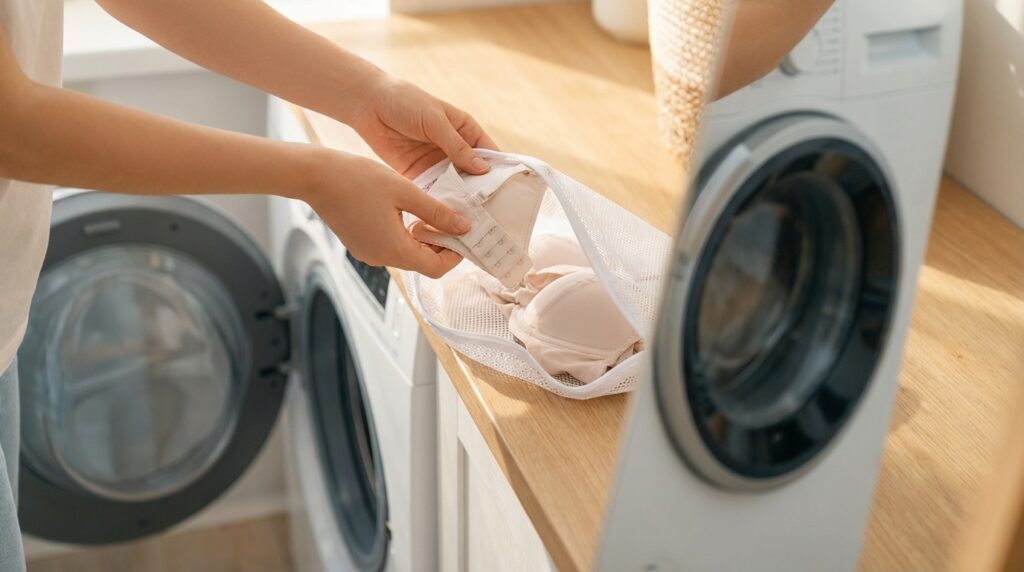
- Use a mesh lingerie bag and wash on the delicate or hand-wash cycle with cold water
- Fasten all hooks before putting bras in the bag to prevent snagging
- Remove bras immediately after the cycle ends to reshape and air dry
- Wash similar colors together to avoid any dye transfer
- If you must machine wash regularly, rotate between several bras so each one gets a break
Machine washing isn’t ideal for bras, but a mesh bag and gentle cycle make it workable when hand washing isn’t realistic. The key is skipping the dryer entirely—heat is the fastest way to kill elastic and warp foam cups.
How to Wash Underwear Properly
Underwear is a bit more forgiving than bras, but the wrong habits still shorten its life. Most people toss underwear in with regular laundry on a warm cycle, which works fine for basic cotton styles. Delicate fabrics like lace, silk, or anything with a lot of stretch need gentler treatment.
Step 1: Sort underwear by fabric type and color. Cotton basics can handle a normal warm cycle. Lace, silk, seamless styles, and anything labeled “delicate” should go in a mesh bag on a gentle cycle with cool water.
Step 2: Use a mild detergent without heavy fragrance or optical brighteners. These additives can irritate sensitive skin and break down elastic over time. A little goes a long way.
Step 3: For delicate underwear, air drying is best. Cotton underwear can usually handle low heat in the dryer, but even then, air drying extends the life of the elastic waistband and leg openings.
If you’re dealing with stains, pre-treat them before washing. A paste of baking soda and water works for most organic stains. Let it sit for 15 minutes, then wash as usual. Avoid bleach on anything with color or elastic—it weakens fibers and causes yellowing on white fabrics over time.
Common Mistakes That Ruin Intimates Fast
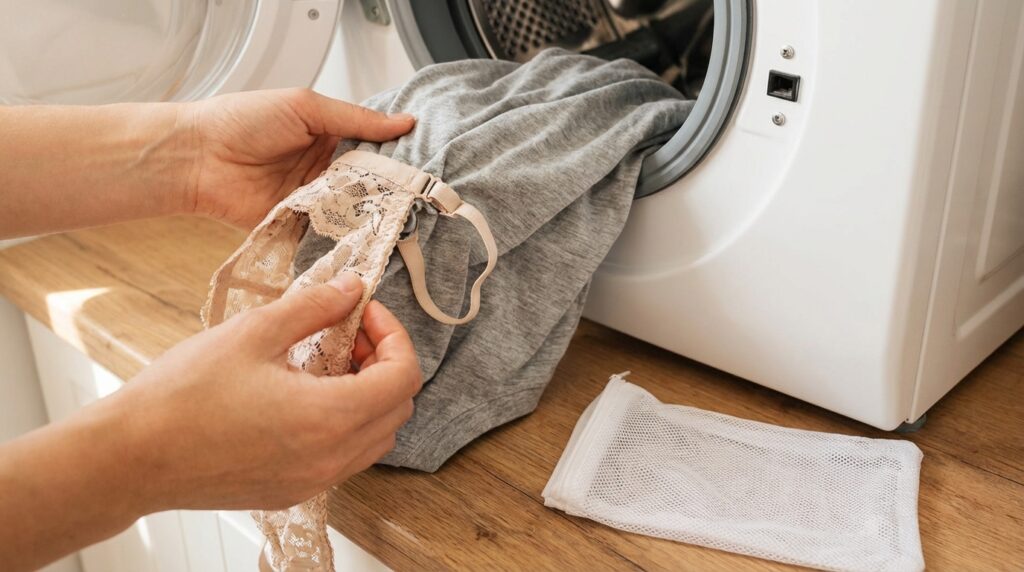
- Using the dryer for bras: Even low heat damages elastic and warps molded cups. Air drying takes longer but saves you from replacing bras constantly.
- Washing bras after every wear: Unless you’re sweating heavily, bras only need washing every 2–4 wears. Overwashing breaks down the fabric faster than normal use.
- Skipping the mesh bag: Hooks catch on other clothes, straps tangle, and cups get crushed. A mesh bag prevents most of this damage.
- Using fabric softener: It coats elastic fibers and reduces their stretch-and-recovery ability. Your bras and underwear will lose their shape faster.
- Hanging bras by the straps: Wet fabric is heavy. Hanging by straps stretches them out permanently. Lay flat or hang by the center gore instead.
- Ignoring care labels: That tiny tag actually matters. Some fabrics need cold water only, and some can’t handle any machine washing at all.
A common issue is people treating all underwear the same way. Your basic cotton briefs and your lace thong have completely different care needs. Taking 30 seconds to sort before washing prevents a lot of premature wear.
Making Your Routine Sustainable
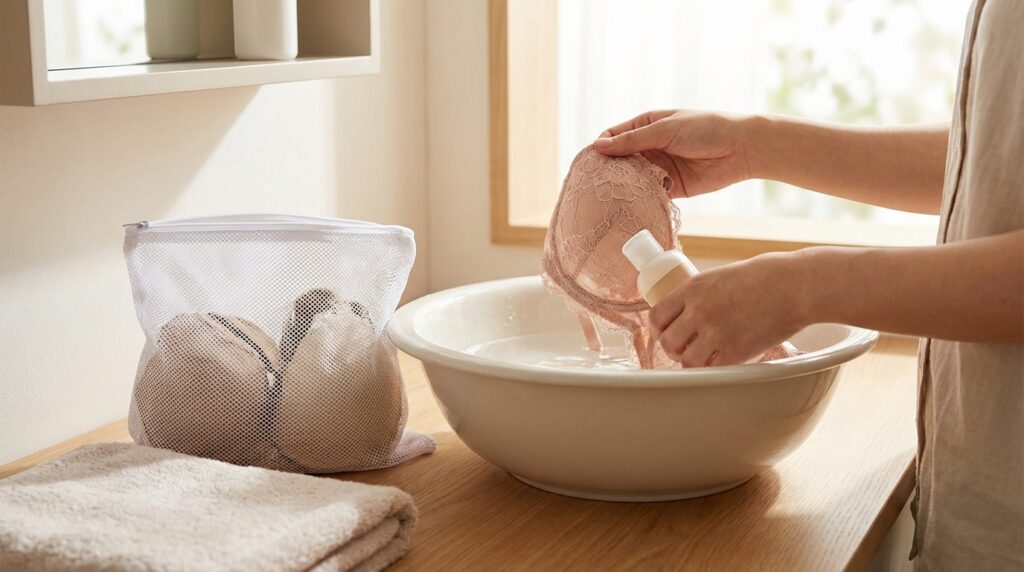
If hand washing every bra sounds exhausting, you’re not alone. Most people find a middle ground that works for their schedule. One approach is to hand wash your nicest or most expensive bras while machine washing everyday styles in a mesh bag. This protects your investment pieces without turning laundry into a part-time job.
Rotating your bras also helps. Elastic needs about 24 hours to fully recover its shape after wearing. If you wear the same bra two days in a row, the elastic doesn’t bounce back as well, and the bra wears out faster. Having at least three or four bras in rotation gives each one time to rest.
For underwear, keeping a small mesh bag in your hamper makes sorting easier. Toss delicates in the bag as you undress, and when laundry day comes, the bag goes straight into the machine. No extra steps, no forgotten lace getting tangled with your jeans.
Summary and Next Step
Washing bras and underwear properly comes down to a few simple habits: cool water, gentle detergent, mesh bags for machine washing, and air drying whenever possible. These small changes protect elastic, preserve shape, and keep your intimates looking and feeling good much longer than the toss-and-tumble approach.
Start with one change this week. If you’ve been drying your bras in the machine, try air drying them instead and see how much longer they hold their shape. Small shifts add up, and your wallet will thank you when you’re not replacing stretched-out bras every few months.